Key takeaways
- The NOAA NCEI Storm Events Database lists 163 hail reports for Hidalgo County from 1956 through 2025.
- Hail season in McAllen peaks in April and May: 104 of those 163 reports (about 64%) fall in those two months, with May alone accounting for 64.
- March through June together account for about 84% of reports, but hail has been reported in every month of the year.
- 113 reports were 1 inch (quarter size) or larger, 62 were golf ball size (1.75 in) or larger, and 12 were baseball size (2.75 in) or larger.
- There is no single hail size that always damages a roof; age, material, and wind all matter.
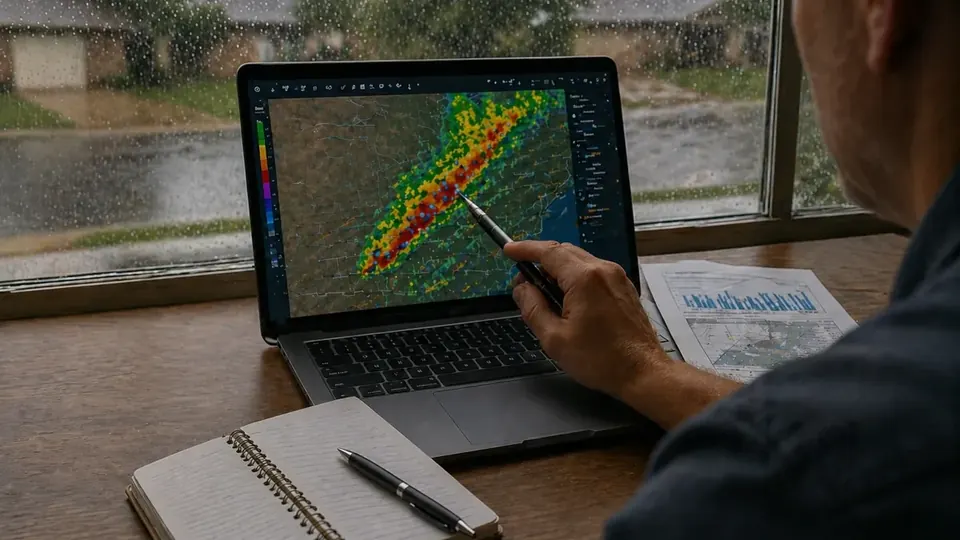
Ask anyone who has lived in the Rio Grande Valley (RGV) for a while and they will tell you spring storms can turn ugly fast. But when exactly is hail season in McAllen, and how often does truly damaging hail fall? Rather than rely on memory, we looked at the official record: the NOAA National Centers for Environmental Information (NCEI) Storm Events Database for Hidalgo County, covering hail reports from 1956 through 2025.
Here is what that data shows, what it does not show, and how to use it when you are dealing with a hail-damaged roof.
McAllen hail season by month
The table below shows every Hidalgo County hail report in the NCEI Storm Events Database from 1956 through 2025, grouped by month. Each row is a count of individual reports, not storm days. A single large storm can generate several reports as it moves across the county.
| Month | Hail reports | Share of total |
|---|---|---|
| January | 2 | 1.2% |
| February | 3 | 1.8% |
| March | 16 | 9.8% |
| April | 40 | 24.5% |
| May | 64 | 39.3% |
| June | 17 | 10.4% |
| July | 3 | 1.8% |
| August | 7 | 4.3% |
| September | 2 | 1.2% |
| October | 6 | 3.7% |
| November | 1 | 0.6% |
| December | 2 | 1.2% |
| Total | 163 | 100% |
Source: NOAA NCEI Storm Events Database, Hidalgo County, Texas (county and forecast zone entries), 1956–2025. Percentages are rounded.
The pattern is clear. Hail risk starts building in March, peaks sharply in April and May, and drops off after June. May is the single busiest month by a wide margin. Late summer and fall bring a handful of reports, and winter hail is rare but not unheard of.
Thunderstorm wind follows a similar rhythm. The same database lists 210 thunderstorm wind reports for Hidalgo County, with May (68) and April (44) again leading, followed by June (30) and August (23). Spring storms that bring hail often bring damaging straight-line winds too, which is why many claims involve both. See our guide to wind damage insurance claims in McAllen for more on that side of the problem.
How big does hail get in Hidalgo County?
Hail reports are measured in inches of diameter. The NOAA Storm Prediction Center publishes a standard conversion table that relates common objects to hail sizes. Here are the references you will see most often in reports, with the Hidalgo County counts for each threshold:
| Size reference | Diameter | Hidalgo County reports at or above this size (1956–2025) |
|---|---|---|
| Quarter | 1.00 in | 113 of 163 |
| Golf ball | 1.75 in | 62 of 163 |
| Baseball | 2.75 in | 12 of 163 |
| Softball | 4.00 in | 4 of 163 (all reported at 4.5 in) |
In other words, about two-thirds of recorded hail reports in the county were quarter size or larger, and more than a third reached golf ball size. That partly reflects how reports are collected: larger hail is more likely to be noticed and reported. Still, it shows that when hail does fall here, it is frequently big enough to matter.
The largest hail reports on record
| Date | Size | Location | NCEI record |
|---|---|---|---|
| April 29, 1991 | 4.5 in | Hidalgo County (two reports) | View |
| March 14, 1997 | 4.5 in | Mission | View |
| April 20, 2012 | 4.5 in | McAllen (McAllen High School) | View |
| May 8, 2025 | 3.0 in | North McAllen (Shayland) | View |
| June 6, 1983 | 2.75 in | Hidalgo County | View |
| March 29, 2012 | 2.75 in | Edinburg Municipal Airport area | View |
| April 21, 2023 | 2.75 in | Peñitas | View |
| April 21, 2023 | 2.75 in | McCook area | View |
| May 13, 2024 | 2.75 in | Southeast of McCook | View |
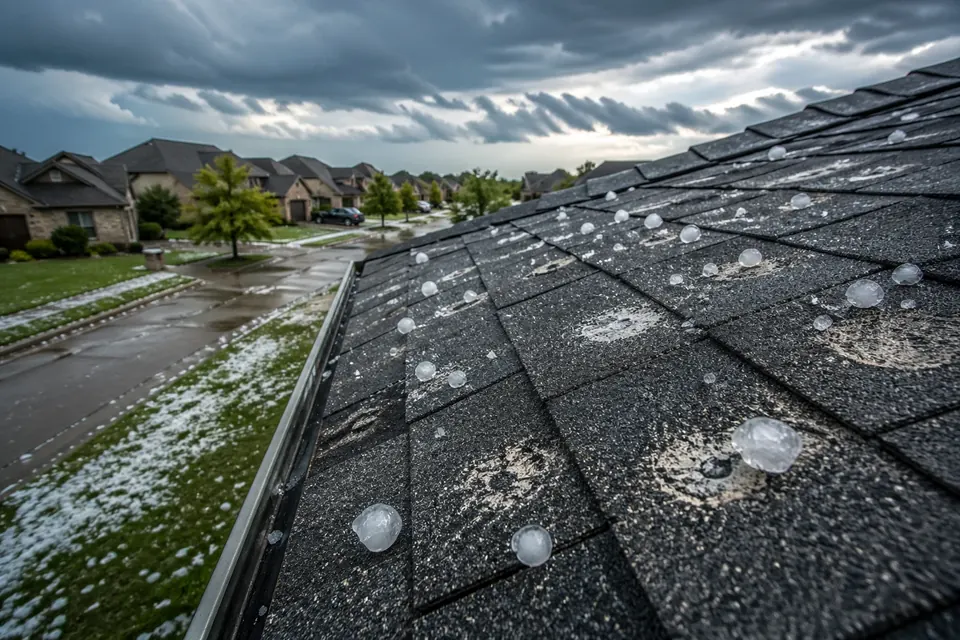
The April 20, 2012 storm stands out for McAllen. The NWS narrative describes softball-size hail reported by the public at McAllen High School, with golf ball to baseball size stones falling for more than twenty minutes as the storm moved across the McAllen and Mission area. (On the SPC conversion table, 4.00 inches is softball size and 4.50 inches is grapefruit size; the NWS record for this event describes the stones as softball size.) More recently, the April 21, 2023 storm brought up to an hour of continuous hail across southern Hidalgo County, and on May 8, 2025, a supercell produced 3-inch hail in north McAllen.
Notice how many of these events fall in March, April, and May. The biggest hail, like hail in general, clusters in spring.
Why the data has limits: reporting bias
NOAA hail data is the best long-term public record available, but it is not a complete count of every hailstorm. A few things to keep in mind:
- More people, more reports. Hail is reported when someone sees it, measures it, and tells the National Weather Service. Storms over McAllen, Mission, and Edinburg are more likely to be reported than storms over ranchland in the northern part of the county.
- Older records are sparse. Reporting networks, radar, spotter programs, and social media have all expanded over the decades. Fewer reports in the 1950s through 1980s does not mean less hail fell.
- Reports, not storms. One storm can generate many reports, while another produces none. The monthly table shows when reports cluster, not the exact number of hail days.
- Size is often estimated. Many reports compare stones to objects instead of measuring them. The SPC encourages measurement over estimation for this reason.
Even with those caveats, the seasonal pattern is consistent and lines up with what RGV roofers and adjusters see every spring.
What size hail damages a roof?
This is one of the most common questions we hear, and the honest answer is that there is no single threshold. Damage depends on several factors working together:
- Roof age and condition. Older composition shingles that have lost flexibility and granules tend to be more vulnerable than newer ones.
- Material. Composition shingles, metal panels, tile, and low-slope commercial membranes all respond differently. Metal may dent without leaking, which can raise cosmetic-damage questions under some policies.
- Wind-driven angle. Hail driven by strong wind strikes harder and at an angle, and it tends to concentrate damage on the slopes facing the storm.
- Stone density and shape. Hard, dense stones can do more damage than slushy ones of the same size.
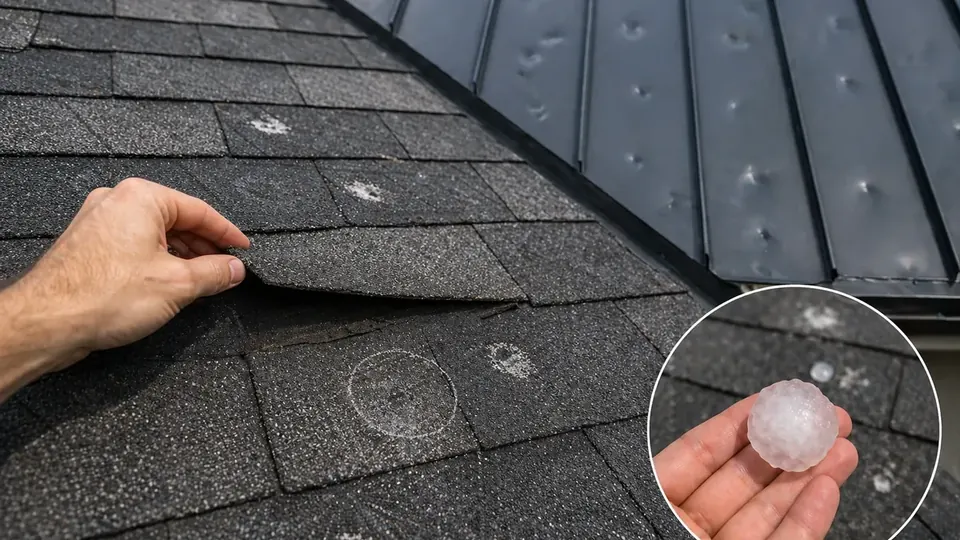
As a general pattern, larger hail is more likely to cause functional damage, and golf ball size hail or larger often gets the attention of roofers and adjusters. But smaller hail combined with strong wind can still damage an aging roof, and large hail does not damage every roof it hits. A slope-by-slope inspection is the only way to know. Our article on roof hail damage insurance claims in McAllen covers what inspectors look for.
Why a busy hail season can complicate your claim
Because hail clusters so tightly in April and May, it is not unusual for the same neighborhood to see more than one hail event in a single spring, or several over a few years. The April 21, 2023 storm, for example, came only about a week before the severe wind event of April 28, 2023, which NWS storm surveys found produced estimated gusts near 85 mph in McAllen. When storms stack up like that, insurers may ask which event caused which damage, or argue that the damage came from a storm before your policy started.
You can make that question easier to answer with a few habits:
- Photograph your roof and exterior each year, ideally before March, so you have a dated record of its condition going into hail season.
- Keep every roofing invoice and inspection report, including from when you bought the property.
- Report each storm separately if you believe each one caused new damage, and note the date you first noticed it.
- Save weather records for each storm date as soon as they are available.
If an insurer does say the damage is old or unrelated, our article on what to do when an insurance company disputes storm damage walks through the common responses.
What to do after a hailstorm in McAllen
- Stay safe. Do not climb onto a wet or damaged roof. Look from the ground and from windows first.
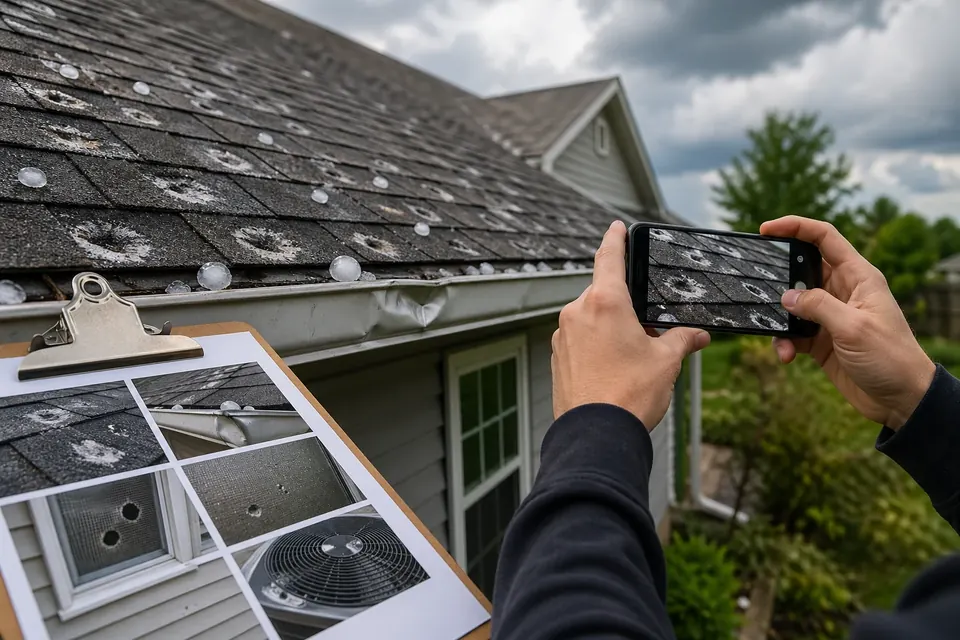
- Photograph hailstones next to a ruler, coin, or other object for scale, and note the time.
- Check collateral damage: gutters, downspouts, AC fins, vents, window screens, fences, cars, and outdoor furniture.
- Look inside for new ceiling stains or leaks, especially after the next rain.
- Prevent further damage with tarps or temporary repairs, and keep the receipts.
- Look up the storm using our storm event lookup or recent weather events page, and save what you find.
- Report the claim promptly. Waiting can make it harder to tie damage to a specific date, especially in a busy hail season.
- Get an independent inspection if you are unsure about the damage or the insurer's findings.
For a full walk-through, see how to document hail damage for an insurance claim and our claim documentation checklist. To understand what the weather records can and cannot prove, read using NOAA weather records to document property damage.
Many Texas policies carry a separate wind/hail deductible, often a percentage of your dwelling limit. Hidalgo County is outside the TWIA area, so McAllen properties typically get wind and hail coverage from their regular insurer. Check your declarations page before hail season so you are not surprised after a storm.
How a public adjuster can help during hail season
Spring hail in the RGV often means many claims at once, busy adjusters, and quick inspections. A licensed Texas public adjuster represents you, not the insurer, and can document the damage, match it to the storm record, prepare a detailed estimate, and present the claim. Joseph Dittman, a licensed Texas public adjuster with Rise Public Adjusting LLC, handles hail damage claims across McAllen, Hidalgo County, and surrounding Rio Grande Valley communities. Fees are disclosed in a written contract before any work begins; Texas law caps public adjuster compensation at 10% of the insurance settlement. Outcomes always depend on your policy and the facts.
Browse the full county record anytime in our storm history tool.
Frequently Asked Questions
What month has the most hail in McAllen?
May. Of the 163 hail reports for Hidalgo County in the NOAA NCEI Storm Events Database from 1956 through 2025, 64 occurred in May and 40 in April. Together, those two months account for close to two-thirds of all reports.
Can it hail in McAllen outside of spring?
Yes, though it is less common. NOAA records include Hidalgo County hail reports in every month of the year, including August, October, and even December and January. The numbers are small, but a hailstorm in an off month can still damage a roof.
What size hail damages a roof?
There is no single threshold. Whether hail damages a roof depends on the stone size and density, wind-driven angle, roofing material, and the roof's age and condition. Larger hail is more likely to cause damage, but smaller hail driven by strong wind can also harm older or weathered shingles. A careful inspection is the only reliable way to know.
What is the largest hail ever recorded near McAllen?
The NOAA record includes several 4.5-inch hail reports in Hidalgo County, including one on April 20, 2012, when the public reported softball-size hail at McAllen High School, and one near Mission on March 14, 1997.
Does a lack of hail reports mean my area was not hit?
No. Hail reports depend on people observing and reporting stones. Storms at night, narrow hail swaths, and less-populated areas lead to gaps. Physical evidence at the property matters more than whether an official report exists nearby.
How soon should I file a hail claim after a storm?
Report damage promptly. Most policies require prompt notice, and waiting can make it harder to tie damage to a specific storm, especially in an area where multiple hail events can occur in one season. Check your policy for any specific deadlines.
Sources and further reading
This article is general information about property insurance claims in Texas, not legal advice, and not a promise of any coverage or outcome. Your policy language and the facts of your loss control your claim.