Key takeaways
- NOAA weather records can help connect hail or wind damage at your McAllen property to a specific storm date.
- The NCEI Storm Events Database is the official long-term record; it is updated monthly and typically published after a delay of a few months.
- NWS Local Storm Reports and Storm Prediction Center reports appear quickly but are preliminary.
- A nearby report does not prove damage at your property, and a missing report does not prove there was none.
- Weather data works best combined with a physical inspection, dated photos, and collateral damage evidence.
After a hailstorm or a violent burst of wind, one of the first questions an insurance adjuster may ask is simple: did a storm actually hit this property on that date? NOAA weather records are one of the most useful tools for answering it. Used correctly, they can strengthen a claim and help prevent disputes over the date of loss. Used carelessly, they can create confusion.
This guide explains which NOAA weather records exist, how to find reports for McAllen and the rest of Hidalgo County, how adjusters use the data, and where the limits are. We include real examples from the Rio Grande Valley (RGV) so you can see what these records look like in practice.
The main NOAA weather records for property damage
"NOAA data" is not one thing. Several agencies and products under NOAA collect storm reports, and each has a different purpose and timeline.
| Source | What it contains | Timing | Status |
|---|---|---|---|
| NCEI Storm Events Database | Official record of significant weather events by county or forecast zone, with dates, times, magnitudes (hail size, wind speed), locations, and narratives. Records go back to 1950. | Updated monthly; new months typically published after a delay of a few months. | Preliminary data is later finalized. |
| NWS Local Storm Reports (LSRs) | Reports collected by the local NWS office (Brownsville/Rio Grande Valley for McAllen) from spotters, the public, law enforcement, and media during and right after storms. | Within minutes to hours. | Preliminary; may be corrected. |
| Storm Prediction Center reports | National daily maps and lists of preliminary hail, wind, and tornado reports compiled from LSRs. | Same day or next day. | Preliminary; not quality-controlled. |
| NWS storm surveys | Damage surveys after significant wind or tornado events, with estimated wind speeds and damage descriptions. | Days after an event. | Often summarized later in NCEI narratives. |
NCEI Storm Events Database
The National Centers for Environmental Information (NCEI) maintains the Storm Events Database. It is the closest thing to an official, long-term record of hail, thunderstorm wind, tornadoes, flooding, freezes, and tropical storms in the United States. Each entry includes a begin date and time, a location, a magnitude, and often a narrative written by NWS staff.
Two things to keep in mind. First, it is updated monthly, and new data is typically published after a delay of a few months, so a storm from last week will not be there yet. Second, the most recent months may be marked preliminary until they are finalized. For older storms, NCEI is the best place to start.
NWS Local Storm Reports
The NWS Brownsville/Rio Grande Valley office serves McAllen and Hidalgo County. During severe weather, it collects reports of hail size, wind damage, flooding, and tornadoes from trained spotters, emergency managers, the public, and social media posts with photos. These Local Storm Reports are fast and specific, but preliminary. Sizes, times, and locations are sometimes corrected later.
Storm Prediction Center reports
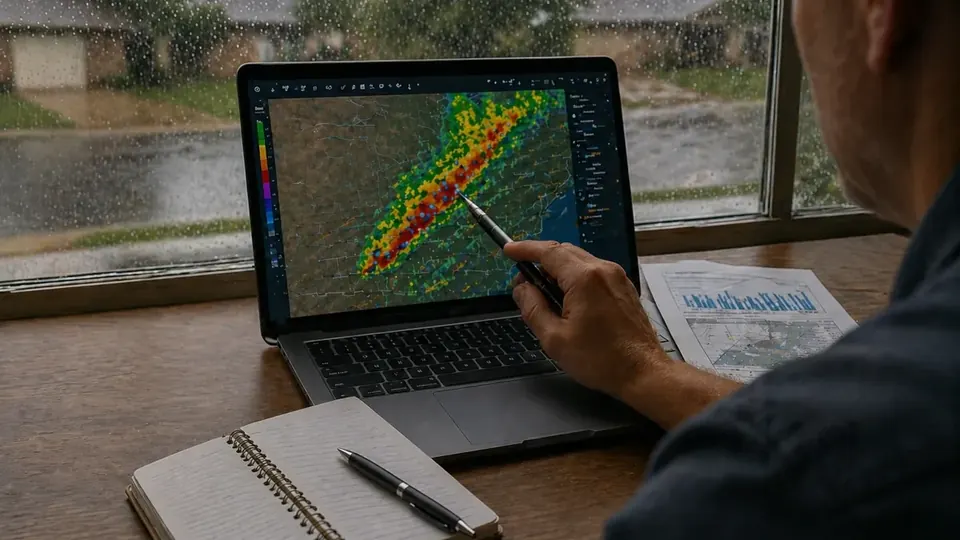
The SPC storm reports page shows a national map and list of preliminary reports for each day. It is a quick way to confirm that hail or damaging wind was reported in the RGV on a given date. Because it draws from the same preliminary LSRs, treat it as a starting point rather than a final record.
Real McAllen examples from the NOAA record
Here is what NCEI entries look like for a few well-known Hidalgo County storms. Click through to see the full records.
April 20, 2012: softball-size hail at McAllen High School
The NCEI record for this event lists 4.5-inch hail reported by the public at McAllen High School, described as softball size, along with golf ball to baseball size stones that fell for more than twenty minutes as the storm crossed the McAllen and Mission area. A related entry describes golf ball to baseball size hail over a swath of the urban center of Mission and McAllen. Notice how the narrative describes duration and path, not just a single size. That context can be useful when explaining why damage is widespread on a property.
April 21, 2023: an hour of hail in southern Hidalgo County
NCEI narratives describe up to an hour of continuous hail across southern Hidalgo County, with golf ball to baseball size hail in the Peñitas area, 2.75-inch hail near McCook, and quarter-size hail covering yards in Mission with stones up to 2.5 inches. Reports of about 1.25-inch hail were also logged in McAllen. Those differences show how hail size can vary widely within a few miles during the same storm.
May 8, 2025: north McAllen supercell
On May 8, 2025, a supercell produced 3-inch hail reported in north McAllen (shared by a member of the public via Facebook), along with a strong microburst with estimated gusts near 74 knots (about 85 mph) near the McAllen–Edinburg city line. One storm, two types of damage: hail and straight-line wind. A claim may involve both.
How to look up storms for your property
You can search the NCEI database directly, but it takes some practice. We built three tools to make it easier for RGV property owners:
- Storm event lookup — search NOAA storm reports near a Hidalgo County city or ZIP code.
- Storm history — a filterable NOAA record of hail, wind, tornado, and flood events in the county.
- Recent weather events — automatically updated National Weather Service storm reports, useful for storms too recent to appear in NCEI.
When you find a relevant report, write down or screenshot the event date and time, the location name, the magnitude, the source of the report, the link, and the date you retrieved it. That small habit makes it easy to share accurate information with an adjuster later.
How adjusters use date-of-loss data
On hail and wind claims, insurers often check whether weather records support the reported date of loss. If the data shows a significant storm near the property on that date, the claim usually moves forward to inspection and scoping. If it does not, the adjuster may question the date, argue the damage is from an earlier storm, or deny the claim. Our article on what to do when an insurer disputes storm damage covers those disputes in depth.
Some common ways date-of-loss data comes into play:
- Confirming the event. Did hail or damaging wind occur near the property on the claimed date?
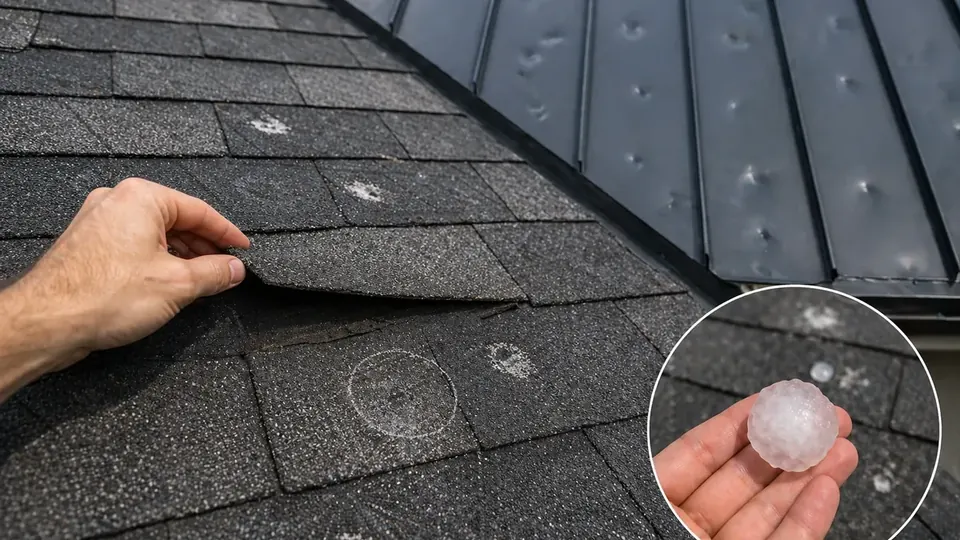
- Checking hail size. Was reported hail large enough to plausibly damage the roofing material involved?
- Identifying prior storms. Were there earlier events, possibly before the policy started, that could explain the damage?
- Matching direction. Does the storm's movement fit the slopes and elevations that show damage?
Insurers sometimes use commercial hail-mapping services that estimate hail size from radar. Those products can be useful, but they are estimates. If a report you receive conflicts with NOAA records or with what you saw, ask for a copy and compare.
The limits of weather records
Weather records are evidence, not proof. Being honest about their limits makes your claim more credible.
A 2.75-inch hail report two miles away does not mean your roof took 2.75-inch hail. Storm cores are narrow and hail size changes block by block. The physical condition of your property is what ultimately shows whether it was damaged.
- Reporting gaps. Reports depend on someone measuring and reporting. Night storms and sparsely populated areas are underreported, so the absence of a report is not evidence that nothing happened.
- Location precision. Many reports are tied to a town name or approximate point, such as "Mc Allen" or "Shayland," not an exact address.
- Estimated values. Many wind speeds are estimated (EG) from damage rather than measured (MG) by an instrument.
- Preliminary data. LSRs and SPC reports may be revised, and NCEI data can change before it is finalized.
Building a stronger date-of-loss file
Combine weather records with property-specific evidence. A practical file for a McAllen hail or wind claim might include:
- NOAA records for the claimed date (NCEI, LSR, or SPC), saved with links and retrieval dates.
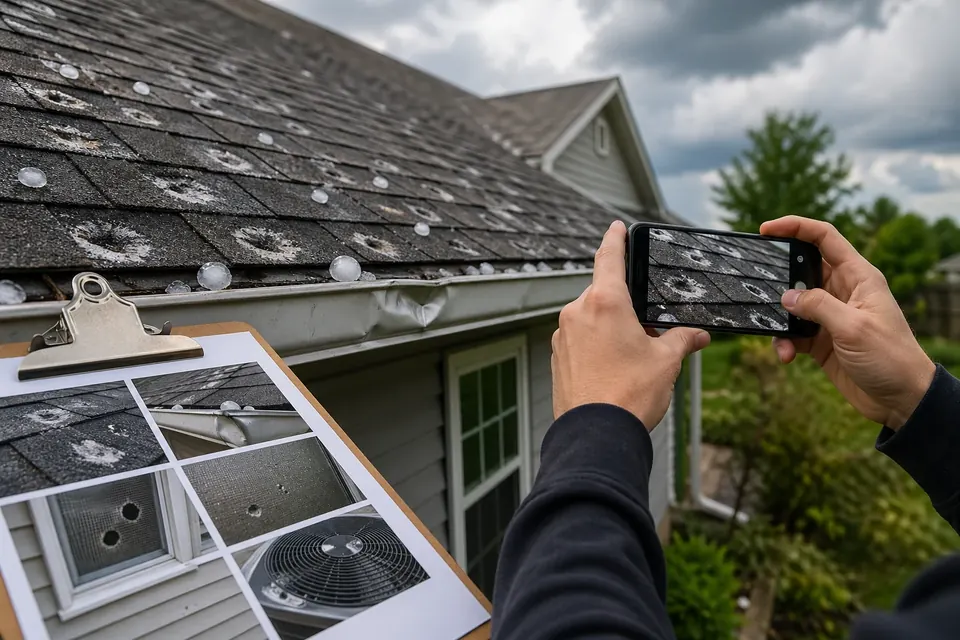
- Photos and videos from the day of the storm, especially of hailstones next to a ruler or coin.
- Photos of collateral damage: dented gutters, vents, AC units, mailboxes, cars, and torn screens.
- Roof and exterior photos taken soon after the storm, and any earlier photos showing prior condition.
- Interior photos of new leaks or ceiling stains with dates.
- Receipts for emergency repairs such as tarping.
Our claim documentation checklist and guide to documenting hail damage for an insurance claim walk through each step.
When a public adjuster can help
A licensed Texas public adjuster can pull and interpret weather records, match them against the damage pattern on your property, and present both together in an organized claim. That is especially helpful when the insurer says no storm occurred, or blames an earlier event. If you are dealing with hail damage or wind damage in McAllen or elsewhere in Hidalgo County, a review of the weather record is often one of the first things we do. No adjuster can guarantee a result, but organized evidence tends to make conversations with the insurer more productive.
Want to see how often hail actually hits the area? Read When Is Hail Season in McAllen? What 70 Years of NOAA Data Shows.
Frequently Asked Questions
Is a NOAA storm report enough to prove my roof was damaged?
No. A storm report shows that hail or damaging wind was observed or estimated at a particular place and time. It does not prove what happened at your specific property. It is supporting evidence that works best alongside a physical inspection, dated photos, and collateral damage at your home or building.
Why is there no hail report for my street when I know it hailed?
Official reports depend on someone observing, measuring, and reporting the hail to the National Weather Service. Hail swaths can be narrow, storms often hit at night, and many hail events go unreported. A missing report does not mean hail did not fall. Your own dated photos, neighbor accounts, and physical evidence still matter.
How long does it take for storms to appear in the NCEI Storm Events Database?
The database is updated monthly, and new data is typically published after a delay of a few months. For a very recent storm, check NWS Local Storm Reports and Storm Prediction Center reports, which are preliminary but available much sooner.
Can storm reports change after they are first published?
Yes. Local Storm Reports and SPC reports are preliminary and may be corrected, and the NCEI Storm Events Database also distinguishes preliminary from final data. Note the date you retrieved a report and save a copy or screenshot.
What date of loss should I put on my claim?
Use the date you believe the damage occurred, based on what you saw and heard plus available weather records. If you are unsure, weather data can help narrow it down. Avoid guessing; an inaccurate date can complicate the claim. A public adjuster can help you review the records before you report.
Do insurance adjusters use NOAA data?
Often, yes. Many insurers and independent adjusters check public storm reports or commercial weather services to see whether hail or wind was reported near a property on the claimed date. That is why it helps to know what the public records say before you talk with the insurer.
Sources and further reading
This article is general information about property insurance claims in Texas, not legal advice, and not a promise of any coverage or outcome. Your policy language and the facts of your loss control your claim.