
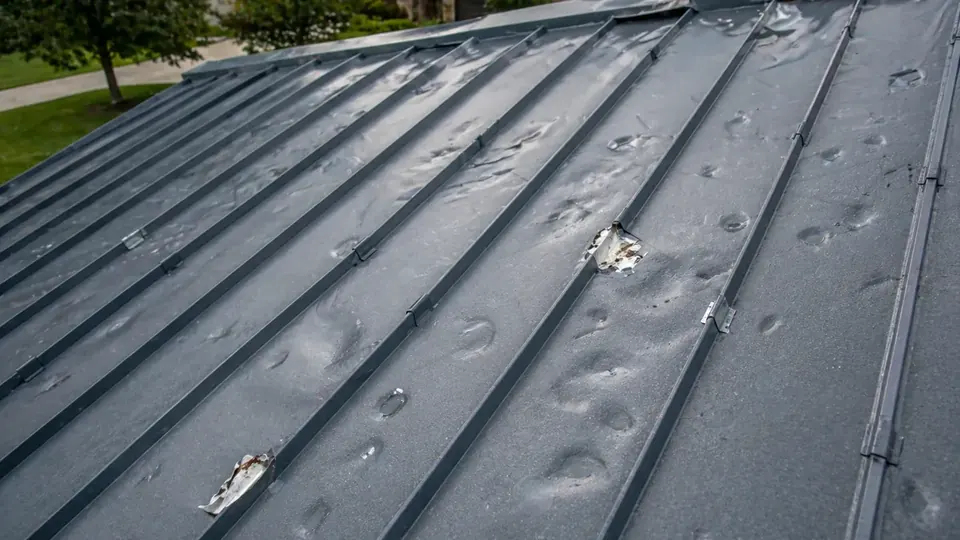
Hurricane damage claims in McAllen are less frequent than hail or wind claims, but when a tropical system arrives, the losses can be widespread. NOAA Storm Events records describe Hurricane Dolly (July 23, 2008) as leaving widespread minor to moderate structural damage across the Lower Rio Grande Valley, along with flooding in low-lying and poorly drained areas (NCEI event record). Hurricane Hanna made landfall on Padre Island as a Category 1 storm on July 25, 2020, then brought tropical-storm impacts and major rainfall flooding to Hidalgo County (NCEI event record).
Because hurricanes combine wind and water, they raise some of the most difficult coverage questions in property insurance. This page explains them for McAllen homeowners and businesses. See our storm history page for more local events.
Types of Hurricane Damage Covered
Coverage depends on what caused each piece of damage and which policy responds:
| Damage | Usually covered by | Notes |
|---|---|---|
| Roof, siding, windows, and fences damaged by wind | Homeowners or commercial property policy | Named storm or wind/hail deductible may apply. |
| Rain entering through wind-created openings | Homeowners or commercial property policy | Often requires proof the storm created the opening. |
| Fallen trees and debris | Homeowners or commercial property policy | Debris and tree removal limits apply. |
| Rising water, overflow, surface water | NFIP or private flood policy | Excluded from standard property policies. |
| Additional living expense / business income | Property policy (if a covered peril caused the loss) | Flood policies generally do not include ALE. |
Hidalgo County and TWIA
The Texas Windstorm Insurance Association (TWIA) provides wind and hail coverage only in designated coastal counties, including neighboring Cameron and Willacy counties. Hidalgo County is not in the TWIA area. McAllen properties typically get wind coverage from their regular insurer, or from the Texas FAIR Plan where applicable, and TDI windstorm (WPI-8) certification does not apply here. Details are on the TWIA website.
Typical Documentation for a Hurricane Claim
- Photos and video of every elevation and room, with water lines clearly shown if flooding occurred.
- Evidence showing where water entered: roof openings and broken windows versus water rising from the ground.
- NOAA and NWS storm records for the event.
- Mitigation invoices, moisture readings, and drying logs.
- Receipts for hotel stays, meals, and other additional living expenses.
- Contents inventory and an itemized building estimate.
- Copies of every policy: homeowners or commercial, flood, and any separate wind coverage.
Our claim documentation checklist can help.
Common Claim Issues and Insurer Arguments
- Wind vs. flood. The property insurer attributes damage to excluded flood; the flood insurer attributes it to wind. Clear evidence of each cause is essential. See water damage vs. flood damage.
- Anti-concurrent causation language. Some policies exclude damage caused by flood even when wind contributed. Policy wording controls.
- Deductible disputes. Whether a named storm deductible or the standard wind/hail deductible applies.
- Pre-existing damage. The insurer says roof leaks existed before the storm.
- Delays. Catastrophe claim volume can slow inspections and payments. See delayed insurance claims.
Insurance Settlement Considerations
- Named storm or hurricane deductibles are often a percentage of Coverage A. Check your declarations page.
- ACV vs. RCV: insurers typically pay actual cash value first and release recoverable depreciation after repairs. NFIP policies have their own valuation rules.
- Ordinance or law: rebuilding must meet McAllen’s 2024 ICC codes, effective January 1, 2026. Upgrade costs are paid only to the extent ordinance or law coverage applies. See local building codes.
- Limits: flood policies have their own building and contents limits, separate from your property policy.
Additional Living Expenses and Catastrophe Timelines
After a hurricane, the practical question for many families is where to stay while repairs happen. If a covered peril such as wind makes the home unlivable, additional living expense (loss of use) coverage typically pays the increase in living costs, such as a rental or hotel, extra mileage, and meals above your normal grocery budget. It does not usually apply when the only damage is from flood, because flood policies generally do not include ALE. Keep every receipt and a simple log of normal versus storm-related expenses.
Timing also changes after a declared catastrophe. Under the Texas Prompt Payment of Claims Act, insurer deadlines to acknowledge, investigate, and decide claims are extended by 15 days after a weather-related catastrophe or major natural disaster declared by the insurance commissioner. Contractors, roofers, and mitigation companies are also in high demand, which can slow repairs and affect deadlines to recover depreciation. If repairs are delayed for reasons outside your control, tell your insurer in writing and keep a copy. The Texas Department of Insurance publishes consumer guidance after major storms.
How a Public Adjuster May Help
A public adjuster in McAllen can review all of your policies, document wind and water damage separately, prepare a detailed estimate, track additional living expenses, and communicate with each insurer. For roofs, see roof damage claims; for interior water, see water damage claims. We cannot guarantee a result. Fees are disclosed in a written contract before any work begins; Texas law caps public adjuster compensation at 10% of the insurance settlement.
Policyholder Responsibilities
- Report the loss to every insurer that may be involved as soon as possible.
- Protect the property from further damage once it is safe, and keep receipts.
- Photograph damaged items before discarding them for health or safety reasons.
- Submit proofs of loss within each policy’s deadline; NFIP proof of loss rules are strict.
- Cooperate with inspections and document requests.
Applicable Policy Limitations and Exclusions
Hurricane claims are commonly limited by flood and surface water exclusions, anti-concurrent causation clauses, named storm deductibles, interior rain provisions, mold sublimits, and debris removal caps. The NFIP excludes or limits certain items, such as many basement contents and additional living expenses. Contractual and statutory deadlines also apply. For legal questions, consult a Texas attorney.
Frequently Asked Questions
Does homeowners insurance cover hurricane damage in McAllen?
Most homeowners policies cover wind damage from a hurricane, subject to a wind/hail or named storm deductible. They generally exclude flood, which requires a separate NFIP or private flood policy.
Do I need TWIA coverage in McAllen?
No. Hidalgo County is not in the TWIA designated catastrophe area. McAllen properties typically get wind and hail coverage from their regular insurer or the Texas FAIR Plan where applicable.
What is a named storm deductible?
Some policies apply a special deductible, often a percentage of the dwelling limit, when damage is caused by a named tropical storm or hurricane. Your declarations page and endorsements explain when it applies.
When should I buy flood insurance?
NFIP policies typically have a 30-day waiting period before coverage starts, so buying flood insurance when a storm is already approaching usually comes too late. Visit FloodSmart.gov for details.
Do insurance deadlines change after a hurricane?
Under Texas prompt payment law, certain insurer deadlines are extended by 15 days after a weather-related catastrophe or major natural disaster declared by the insurance commissioner. Your own policy deadlines still apply.
Can I have both a homeowners claim and a flood claim?
Yes. If wind and flood both damaged the property, you may file with each insurer. Each one will evaluate only the damage its policy covers, so clear documentation of each cause matters.