
Key takeaways
- "Water damage" and "flood damage" are different insurance categories. Standard homeowners and commercial policies generally exclude flood.
- Sudden and accidental water, such as a burst pipe, is often covered; continuous or repeated seepage over time often is not.
- Rain damage inside a building is commonly covered only when wind or hail first creates an opening in the roof or walls.
- Flood coverage comes from the NFIP or a private flood policy, which usually has a 30-day waiting period for NFIP coverage.
- Hidalgo County has dozens of flash flood and flood entries in NOAA's Storm Events Database, and mixed-cause claims after tropical systems are common.
Wet drywall looks the same whether the water came from a broken supply line or from a flooded street. Your insurance company will not see it that way. Understanding water damage vs. flood damage is one of the most important things a McAllen property owner can learn before the next heavy rain, because the source of the water often decides which policy responds, and whether any policy responds at all.
This guide explains how homeowners and commercial property policies typically treat water damage, how flood insurance works, what "sudden and accidental" means in practice, and how to handle claims where wind, rain, and rising water all arrive in the same storm. It is general information. Your policy wording controls.
Water damage vs. flood damage: the basic difference
In insurance terms, the question is usually not how much water there was, but where it came from and how it got in.
- Water damage generally refers to water that originates inside the building or enters from above: a burst pipe, a failed water heater, an overflowing appliance, or rain that enters through a storm-damaged roof.
- Flood damage generally refers to surface water that rises and enters from outside and below. The NFIP and FEMA define a flood as a general condition where two or more properties or acres of normally dry land are partially or completely submerged by water from overflowing inland or tidal waters, unusual and rapid surface water runoff, mudflows, or related causes.
That flood definition matters. Under the NFIP, a single home with water pooling in the yard may not meet it, while a street-wide flash flood after a slow-moving storm usually will.
Comparison table: how coverage typically lines up
| Situation | Usually evaluated under | Common issues |
|---|---|---|
| Burst supply line or water heater failure | Homeowners or commercial property policy | Sudden vs. long-term leak; cost to access the pipe; mold limits |
| Rain enters through a roof opening created by wind or hail | Homeowners or commercial property policy | Proving the storm created the opening; date of loss; prior roof condition |
| Rain enters through an old, worn roof with no new storm opening | Often excluded or limited under property policy | Wear and tear, maintenance, and deterioration exclusions |
| Slow leak under a sink or behind a shower over weeks or months | Often excluded as continuous or repeated seepage | Timeline of the leak; hidden vs. visible damage |
| Sewer or drain backup | Property policy only if a backup endorsement applies | Endorsement limits; distinguishing backup from flood |
| Street or yard flooding enters the home or business | NFIP or private flood policy | Waiting periods; building vs. contents limits; proof of loss deadlines |
| Hurricane with roof damage and rising water | Both: property policy for wind/rain-through-opening, flood policy for rising water | Allocating damage between policies; separate deductibles |
How homeowners policies treat water damage
Sudden and accidental vs. continuous seepage
Most homeowners and commercial property policies cover water damage that is sudden and accidental. A washing machine hose that bursts and floods a laundry room is the classic example. The policy may also pay to tear out and replace part of a wall or slab to reach the broken pipe, though the pipe itself may or may not be covered depending on the form.
The flip side is the exclusion for continuous or repeated seepage or leakage. Many policies exclude damage from a leak that went on over a period of weeks, months, or years. Some forms specify a period, such as 14 days or more. Hidden leaks are a gray area: a leak inside a wall that the owner could not have seen may be handled differently from a dripping faucet ignored for a year. This is where policy wording and facts matter most.
McAllen's common construction affects these claims. Most homes here are slab-on-grade, so supply lines and drain lines often run in or under the slab. A slab leak can wet flooring and baseboards across several rooms before anyone notices, which raises questions about timing. Moisture readings, plumber reports, and photos taken at discovery all help establish what happened and when.
Rain damage and the storm-created opening rule
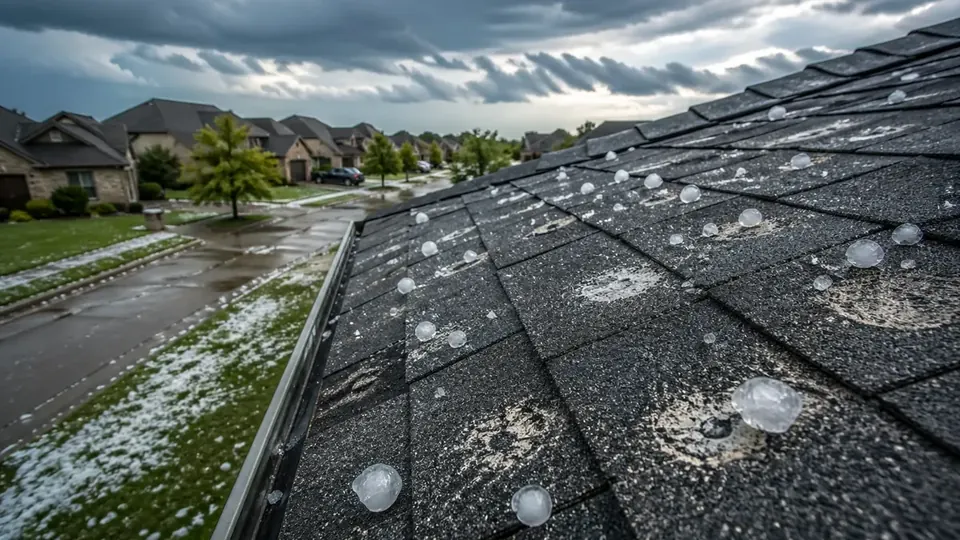
Rain is not the same as flood, but it is not automatically covered either. Many policies cover interior rain damage only when wind or hail first creates an opening in the roof or walls through which the rain enters. If the rain simply found its way through an aging roof, the claim may be denied under wear-and-tear exclusions.
That is why documenting the opening is essential after a storm. Photograph missing shingles, lifted flashing, broken skylights, damaged vents, and cracked or broken windows, and connect them to the date of the storm. NOAA's Storm Events Database can help confirm that damaging wind or hail occurred near your property on that date. Our wind damage claims and roof damage claims pages explain what adjusters typically look for.
The February 2021 freeze brought temperatures in the lower 20s to upper teens across southern Hidalgo County, with McAllen International reporting a low of 21°F. Burst pipes from a freeze are usually a water damage question under the property policy, not a flood question. Policies may include conditions about maintaining heat or draining systems. See our guide to freeze damage and burst pipe claims.
How flood insurance works
Because standard property policies generally exclude flood, McAllen owners who want flood coverage typically buy it separately through the National Flood Insurance Program (NFIP) or a private flood insurer.
- Waiting period. According to FloodSmart, NFIP coverage generally takes effect 30 days after purchase, with limited exceptions such as coverage bought when making, increasing, extending, or renewing a mortgage.
- Building and contents are separate. NFIP policies have separate building and contents coverage. Standard NFIP residential limits are up to $250,000 for the building and $100,000 for contents. Renters can buy contents coverage.
- Deadlines are strict. NFIP policies have their own proof of loss requirements and deadlines, which are generally shorter and more rigid than many homeowners policies. Read your flood policy as soon as a loss happens.
- Private flood policies vary. Some private policies offer higher limits or additional living expense coverage. Others have different exclusions. Compare the actual wording.
Flood zone maps matter for pricing and lender requirements, but flooding happens outside high-risk zones too. Poor drainage, intense short-duration rainfall, and urban runoff can flood streets and low-lying lots well away from mapped floodplains.
Flash flooding history in McAllen and Hidalgo County
Water claims in the Rio Grande Valley (RGV) are not only a hurricane issue. NOAA's NCEI Storm Events Database lists 70 flash flood entries, 46 flood entries, and 30 heavy rain entries for Hidalgo County and its forecast zones. These entries cover reported events, not every storm that caused local street flooding, so the real history of water problems is broader than the database alone.
A few documented episodes show the range:
| Date | Event | What NOAA records describe |
|---|---|---|
| July 16, 2007 | EF1 tornado and heavy rain in McAllen | Intense thunderstorms produced a tornado along with torrential rainfall and widespread street flooding |
| July 23, 2008 | Hurricane Dolly | Widespread minor to moderate structural damage across the Lower RGV and copious rainfall, with flooding primarily in low-lying and poor-drainage locations |
| July 25–26, 2020 | Hurricane Hanna | Category 1 landfall on Padre Island (Kenedy County); tropical-storm impacts and major rainfall flooding in Hidalgo County |
Hurricane Hanna is a good example of why the water damage vs. flood damage question matters here. Hanna made landfall well up the coast in Kenedy County, yet NOAA records describe major rainfall flooding in Hidalgo County. When a storm's biggest impact inland is rain rather than wind, a property can end up with water inside from rising surface water and little visible roof damage. Without flood coverage, that kind of loss may fall outside a standard homeowners policy. Read more in our hurricane damage guide for McAllen homeowners and on our storm history page.
Mixed-cause claims: when wind, rain, and flood arrive together
Tropical systems and severe thunderstorms often bring more than one peril at once. A single storm can tear shingles off a roof, drive rain through the opening, and flood the street hard enough that water enters through the front door. That leaves the owner with potentially two claims under two policies, often with two adjusters and two deductibles.
Why mixed-cause claims get complicated
- The property insurer may attribute interior damage to flood, which its policy excludes.
- The flood insurer may attribute damage to wind or rain, which its policy does not cover.
- Some damage, such as wet drywall at mid-wall height, could plausibly come from either source.
- Policy language, including anti-concurrent causation wording in some forms, can affect how mixed causes are handled.
How to document a mixed-cause loss
- Mark and photograph the flood line. Water lines on walls, cabinets, and doors show how high rising water reached. Measure from the floor.
- Document ceiling and upper-wall damage separately. Stains and wet insulation above the flood line point toward roof or wall openings.
- Photograph the roof and exterior openings. Missing shingles, displaced flashing, and broken windows help connect interior damage to wind.
- Record timing. Note when you first saw water coming through the ceiling versus when water entered at floor level.
- Keep mitigation records. Moisture maps, drying logs, and invoices from water mitigation companies often show where moisture was found and at what heights.
- Pull weather records. Rainfall and wind data for your date of loss help support the cause. Our guide to using NOAA weather records explains how.
Report to both insurers promptly if you have both coverages. Do not assume one insurer will notify the other.
Practical steps after any water loss
- Stop the source if you can safely do so, such as shutting off the main water valve.
- Take photos and video before moving anything, then mitigate: extract water, remove wet materials as needed, and run drying equipment.
- Keep damaged materials or samples when practical, and photograph anything that must be thrown away.
- Notify your insurer promptly and ask which policy and adjuster will handle each part of the loss.
- Keep receipts for emergency services, hotel stays, and supplies.
Our claim documentation checklist lists what to gather. If your water claim has been denied as "seepage," "flood," or "wear and tear," our water damage claims page explains how a licensed Texas public adjuster can review the policy language and the evidence. Coverage always depends on the policy and the facts, and questions about legal rights should go to a Texas attorney.
The bottom line
In McAllen, the line between water damage and flood damage is drawn by the source of the water, not the size of the mess. Know what your homeowners or commercial policy covers, consider whether flood insurance makes sense for your property before storm season, and document every water loss in a way that shows where the water came from and when.
Frequently Asked Questions
Does homeowners insurance cover flood damage in McAllen?
Standard Texas homeowners and commercial property policies generally exclude flood. Flood coverage typically comes from a separate National Flood Insurance Program (NFIP) policy or a private flood policy. Check your declarations page and any endorsements to confirm what you have.
If rain came through my roof during a storm, is that flood damage?
Usually not. Rain entering through a roof or wall is generally evaluated under your homeowners or commercial property policy. Many policies cover interior rain damage when wind or hail first creates an opening in the roof or walls, so documenting the storm-created opening is important. Water rising from the ground and entering the building is the situation more likely to be treated as flood.
How long is the waiting period for NFIP flood insurance?
According to FloodSmart, NFIP coverage generally takes effect 30 days after purchase, with limited exceptions, such as coverage bought in connection with making, increasing, extending, or renewing a mortgage loan. Buying a policy when a storm is already forecast is usually too late for that storm.
What if my property has both wind damage and flood damage from the same storm?
That is a mixed-cause loss. Wind and rain-through-opening damage is generally submitted to your property insurer, while rising-water damage is submitted to your flood insurer. Each insurer will typically look at which damage was caused by the peril it covers, so clear documentation of water lines, roof openings, and timing is important.
Is a slow leak under my sink covered?
Many policies cover sudden and accidental discharge from plumbing, but exclude damage from continuous or repeated leakage or seepage over a period of time. Some forms specify a period, such as 14 days or more. Coverage depends on your exact policy language and the facts.
Is sewer or drain backup covered by homeowners insurance?
Often only if you have a water backup endorsement. Many standard policies exclude water that backs up through sewers or drains. Review your endorsements or ask your agent.
Sources and further reading
This article is general information about property insurance claims in Texas, not legal advice, and not a promise of any coverage or outcome. Your policy language and the facts of your loss control your claim.