
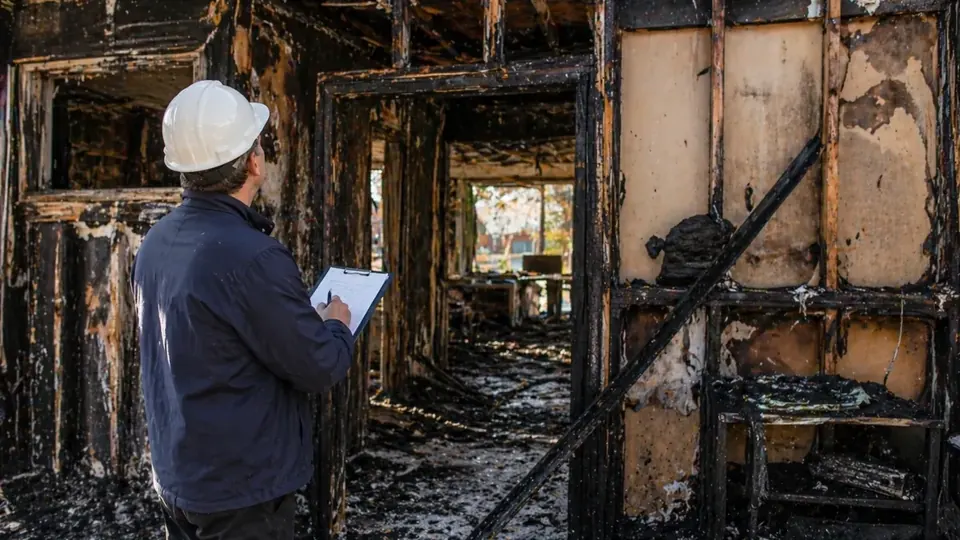
Smoke damage claims in McAllen often follow kitchen fires, electrical fires, garage fires, or a fire at a neighboring home or business. Smoke can contaminate an entire building through open doors, wall cavities, attic space, and especially the HVAC system, which in a hot Rio Grande Valley climate is running most of the year. The damage is not always obvious, and that makes smoke claims prone to disagreement.
Smoke damage can also come from outside your property. A fire in a neighboring unit, an adjacent business in a shared strip center, or a nearby structure can push smoke into your building even when no flames ever reached it. Those losses are still documented and claimed under your own policy, subject to its terms.
This page explains how smoke claims work. If your loss involves burned structure, see our fire damage claims page as well.
Types of Smoke Damage Covered
- Soot deposits on walls, ceilings, cabinets, windows, and flooring.
- Odor absorbed into drywall, insulation, carpet, upholstery, and clothing.
- HVAC contamination in ductwork, air handlers, coils, and returns.
- Contents damage to textiles, electronics, artwork, and documents.
- Corrosion of metal surfaces and electronics from acidic soot residue.
- Commercial inventory and equipment exposed to smoke (see commercial property claims).
Typical Documentation for a Smoke Claim
| Document | Purpose |
|---|---|
| Fire department report | Confirms the date, source, and nature of the fire. |
| Room-by-room photos | Shows soot on surfaces, inside cabinets, closets, and vents. |
| Testing or wipe samples | Helps document residue where it is not visible. |
| HVAC inspection report | Records contamination in ducts, coils, and air handler. |
| Cleaning invoices and results | Shows whether cleaning worked or odor remained. |
| Contents inventory | Lists items cleaned, items that could not be restored, and replacement costs. |
| ALE receipts | Supports temporary housing if the home was unlivable during cleanup. |
Our claim documentation checklist covers additional items.
Common Claim Issues and Insurer Arguments
- Cleaning vs. replacement. The most common dispute. Insurers often prefer cleaning; some materials, such as porous ceiling texture, insulation, and soft goods, may not be restorable.
- Limited scope. The insurer treats only the room where the fire occurred and not adjacent rooms or the attic.
- HVAC excluded from the scope. Duct cleaning or replacement is left out.
- Odor persistence. After cleaning, odor returns in heat and humidity, yet the file is closed.
- Sealing and painting. Only stained areas are painted rather than continuous wall and ceiling surfaces, leading to mismatch.
- Cause of smoke. Smoke from excluded sources, such as fireplaces or agricultural burning, is denied.
Insurance Settlement Considerations
- Deductible. Smoke from a fire usually falls under your all-other-perils deductible.
- ACV vs. RCV. Replaced contents and building materials may be paid at actual cash value first, with depreciation released after replacement. See RCV vs. ACV in Texas.
- Limits. Dwelling, contents, ALE, and special limits for valuables each apply separately.
- Ordinance or law. If smoke remediation requires replacing electrical or HVAC components, work must meet McAllen’s 2024 ICC codes and the 2023 National Electrical Code effective January 1, 2026. Upgrade costs depend on ordinance or law coverage. See McAllen building codes.
Why Smoke Damage Is Easy to Underestimate
Smoke follows air pressure and temperature differences, so it moves through attic spaces, wall cavities, electrical outlets, and the return side of the HVAC system. Rooms far from the fire can end up with fine soot inside closets and cabinets, on the tops of door frames, and in the ductwork. Because McAllen homes often run air conditioning nearly year-round, a system running during or after the fire can carry residue throughout the house.
Odor can also come back. Soot and smoke odor absorbed into porous materials such as insulation, drywall paper, carpet pad, and upholstery may seem gone after an initial cleaning, then return on hot, humid days. That is one reason it helps to document the property before and after cleaning.
| Material | Cleaning often attempted | When replacement may be argued |
|---|---|---|
| Painted walls and ceilings | Cleaning, sealing, repainting | Persistent staining or odor through sealer |
| Insulation | Rarely cleanable | Smoke-exposed attic insulation retains odor |
| Ductwork | Professional duct cleaning | Flexible or lined duct that cannot be cleaned effectively |
| Upholstery, mattresses, clothing | Ozone or specialty cleaning | Odor or staining remains after cleaning |
| Electronics | Specialty cleaning | Corrosion or failure from acidic residue |
How a Public Adjuster May Help
A public adjuster can document smoke migration throughout the property, review the cleaning protocol and results, compare the insurer’s estimate against what restoration actually requires, organize the contents inventory, and present the claim. An insurance estimate review can identify missing rooms or items; if the claim has already been paid, an insurance claim supplement may be appropriate. If the dispute is over the amount of loss, appraisal may be an option. We cannot guarantee a result. Fees are disclosed in a written contract before any work begins; Texas law caps public adjuster compensation at 10% of the insurance settlement.
Policyholder Responsibilities
- Report the smoke damage promptly, even if the fire was small or next door.
- Take reasonable steps to limit further damage, such as replacing HVAC filters and ventilating the home if it is safe.
- Keep damaged contents until documented, unless they pose a health risk.
- Submit a proof of loss when requested, within the policy deadline.
- Cooperate with inspections, testing, and document requests.
Applicable Policy Limitations and Exclusions
Smoke claims may be limited by exclusions for smoke from agricultural smudging or industrial operations, gradual or repeated exposure (such as from a fireplace or candles), wear and tear, and pollutant or contaminant provisions. ALE has time or dollar limits, and depreciation recovery may depend on completing repairs within a stated period. Policies may also impose a deadline to file suit. For legal questions, consult a Texas attorney.
Frequently Asked Questions
Is smoke damage covered if there was no fire in my home?
Many policies cover sudden and accidental smoke damage from a hostile fire, including a fire next door. Smoke from agricultural burning, fireplaces, or industrial operations is often excluded. Policy language controls.
Will insurance clean my HVAC system after smoke damage?
If smoke from a covered loss contaminated the system, duct cleaning, filter replacement, and in some cases replacement of components or ductwork may be part of the claim.
The insurer wants to clean my belongings. Can I ask for replacement?
You can present evidence that cleaning has not or will not restore an item to its pre-loss condition, such as lingering odor or permanent staining. The insurer will evaluate that evidence under the policy.
How do I prove smoke damage that I cannot see?
Odor, residue on wipe samples, and professional testing can help document contamination. Photos of soot inside cabinets, closets, and vents are also useful.
Does a small kitchen fire justify a claim?
It depends on how far smoke and soot spread and how the repair cost compares to your deductible. Even a small stovetop fire can leave residue through cabinets, the attic, and the HVAC system, so it helps to have the damage assessed before deciding.
Should I throw away smoke-damaged food and medicine?
For safety, many items exposed to smoke and heat should be discarded. Photograph and list them first so they can be included in the contents inventory.