
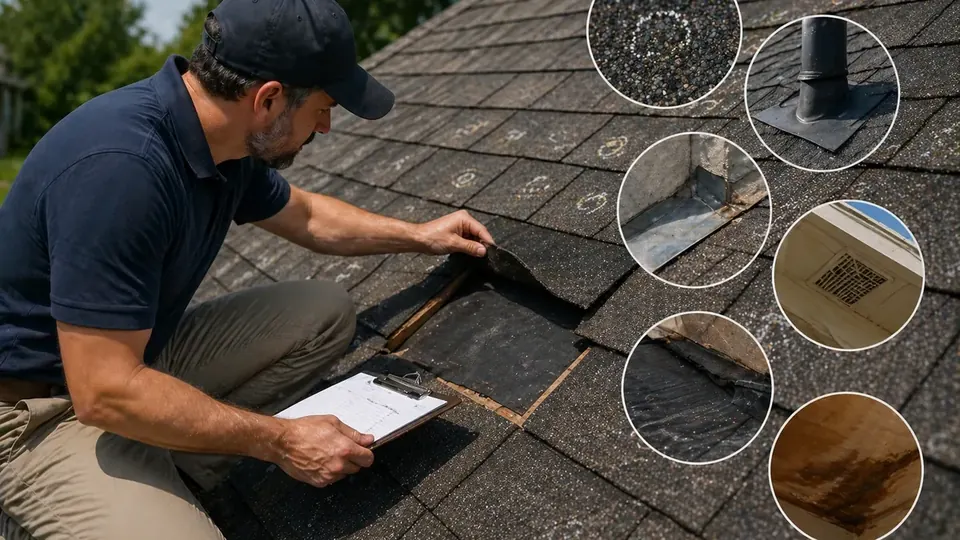
Even careful adjusters miss things. Roof decking can only be inspected once shingles come off, water can travel behind cabinets, and code requirements may not show up until the permit is pulled. Insurance claim supplements are how those items get added to an existing claim. We help property owners in McAllen, Hidalgo County, and the Rio Grande Valley (RGV) prepare supplements that are specific, documented, and tied to the original loss, including on claims that were previously considered settled.
Types of Damage That Lead to Supplements
- Missed items on the original estimate, such as drip edge, starter, ridge vents, flashing, gutters, or AC fins.
- Short measurements where squares, linear feet, or wall areas were under-counted.
- Hidden damage found during repairs: soft decking, wet insulation, damaged framing, or water behind walls.
- Code upgrades required by the City of McAllen when repairs are permitted.
- Price changes when material or labor costs differ from the original estimate.
- Later-discovered damage from the same event, such as leaks that appear in the next heavy rain.
Hail claims are especially prone to supplements. See our hail damage claims page and the article on hail damage claim supplements.
Typical Supplement Documentation
| Supplement reason | Supporting documentation |
|---|---|
| Missed line items | Photos of each item, a line-item estimate, and reference to the original estimate |
| Hidden damage during repairs | Before, during, and after photos; contractor notes; a note of when it was found |
| Code upgrades | Permit records, inspector notes, the specific code section or requirement |
| Quantity corrections | Field measurements, aerial measurement reports, sketches |
| Pricing differences | Itemized local bids and invoices |
| Reopened claims | Original claim file, new photos, and an explanation linking damage to the original date of loss |
Our claim documentation checklist can help you stay organized.
How a Supplement Is Built
A strong supplement is easy for the desk adjuster to follow. It typically includes a short cover letter that identifies the claim number and date of loss, a list of each added or corrected item, a line-item estimate that uses the same format as the insurer's estimate, and photos labeled to match each line. Where code items are involved, it cites the permit or inspector requirement. Where hidden damage is involved, it shows the condition before and after the area was opened. The goal is to make each requested item verifiable without another inspection, although the insurer may still choose to re-inspect.
On McAllen roofs, for example, supplements often involve decking replacement found at tear-off, additional underlayment or drip edge required by the adopted code, and accessories such as pipe jacks or vents that were not itemized originally.
Common Supplement Issues
No photos before the damage was covered
If decking is replaced or a wall is closed before anyone photographs the damage, the insurer may have little to evaluate. Photograph first, then notify the insurer.
Unclear connection to the original loss
Supplements are evaluated against the original covered event. Explaining how the new item relates to that date of loss is important.
Code items without coverage
The City of McAllen adopted the 2024 ICC codes effective January 1, 2026. Code compliance is required for permitted work, but payment depends on ordinance or law coverage. See local building codes and building codes and insurance repairs.
Timing
Delays in submitting a supplement can make it harder to support. Many policies set a timeframe for reopening a claim, so act promptly.
Reopening Previously Settled Claims
Many policyholders assume a closed claim is final. In practice, many Texas policies allow a claim to be reopened or supplemented under certain conditions, typically within a timeframe defined in the policy. A previously settled claim may be worth reviewing if:
- Additional damage surfaced after the claim closed
- Repairs revealed hidden issues
- The scope or pricing was incomplete
- The settlement did not reflect actual repair costs
Whether a closed claim can be reopened depends on your policy, how much time has passed, and the facts. If a legal deadline may be involved, consult a Texas attorney.
Insurance Settlement Considerations
Supplements are usually paid as additional amounts on the same claim, subject to the same deductible already applied. On replacement cost policies, the supplemented items may also carry depreciation that is released after repairs are completed. If the insurer disagrees with the amount of a supplement, appraisal may be available under the policy. You can model the effect of added items with our claim calculator.
How a Public Adjuster May Help
- Comparing the insurer's estimate with the actual scope; see insurance estimate review
- Documenting hidden damage when it is discovered
- Preparing a line-item supplement estimate in Xactimate
- Tying code items to ordinance or law coverage in your policy
- Following up with the insurer until the supplement is decided
We cannot guarantee that a supplement will be approved. Coverage depends on the policy and the facts. Fees are disclosed in a written contract before any work begins; Texas law caps public adjuster compensation at 10% of the insurance settlement.
Policyholder Responsibilities
- Notify the insurer promptly when new damage is found.
- Photograph hidden damage before it is repaired or covered.
- Allow the insurer a reasonable opportunity to inspect.
- Keep invoices, permits, and contractor notes.
If you are working with a contractor, ask them to stop and call you before closing up any area where unexpected damage appears, so it can be photographed and reported first.
Applicable Policy Limitations
- Time limits for reopening claims or claiming recoverable depreciation
- Ordinance or law sublimits for code work
- Exclusions for wear and tear, deterioration, and long-term leaks
- Matching provisions that differ by policy
If your claim was underpaid or you found more damage after payment, request a Free Claim Review.
Frequently Asked Questions
What is an insurance claim supplement?
A supplement is a request for additional payment on an existing claim for items that were missed, under-measured, or discovered later, such as damaged decking found during a roof tear-off. It should be supported by photos, measurements, and a line-item estimate.
Can I supplement a claim that was already closed?
Often, yes. Many policies allow a claim to be reopened or supplemented within a timeframe stated in the policy. The insurer will review whether the new items relate to the original covered loss.
Should I stop repairs if hidden damage is found?
Notify the insurer promptly and photograph the damage before it is covered up. Ask whether the insurer wants to inspect before work continues. Keep protecting the property from further damage in the meantime.
Will the insurer pay for code upgrades in a supplement?
Only to the extent your policy includes ordinance or law coverage, and up to its limit. Code requirements alone do not obligate the insurer to pay.
Can my roofer submit the supplement?
Contractors often send supplement requests for their own scope. A public adjuster represents you, the policyholder, across the whole claim, and under Texas law cannot also participate in the repair of the property on a claim they adjust.
What does a public adjuster charge for a supplement?
Fees are disclosed in a written contract before any work begins; Texas law caps public adjuster compensation at 10% of the insurance settlement.