Key takeaways
- Commercial storm claims often include building, equipment, contents, inventory, and business income, each with its own documentation needs.
- Low-slope and metal roofs, rooftop HVAC units, signage, and storefront glass are the most commonly damaged components in RGV wind and hail events.
- Photograph wide, medium, and close-up views in a consistent order, and preserve evidence before permanent repairs.
- Business income claims depend on financial records: prior-year comparisons, payroll, and extra expenses.
- Leases decide who insures and repairs what. Review them before you file.
When a storm damages a store, office building, warehouse, or strip center, the clock starts on more than repairs. Customers, tenants, payroll, and inventory are all affected, and the insurance claim usually covers several different types of loss at once. Knowing how to document commercial property damage after a storm can make the difference between a claim that is clearly understood and one that drags on through rounds of questions.
This guide is written for business owners and property managers in McAllen, Hidalgo County, and the surrounding Rio Grande Valley (RGV). It covers what to photograph, what records to pull, and how leases and vendors fit into the claim. It is general guidance. Coverage depends on your commercial policy and the facts of the loss.
Why commercial storm damage needs careful documentation
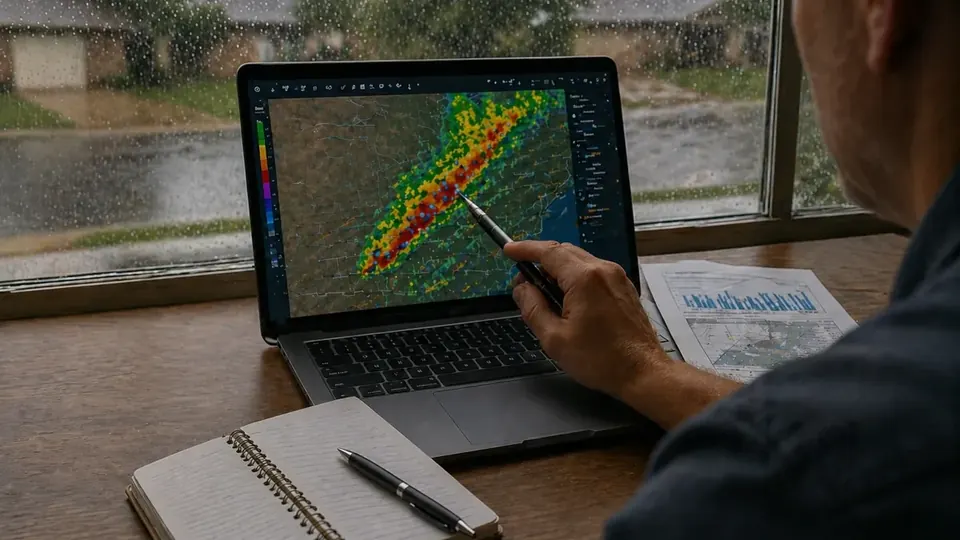
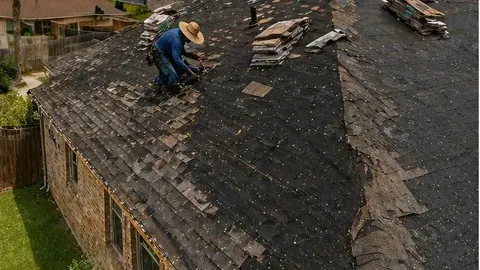
The RGV sees real commercial storm damage. NOAA's Storm Events Database describes the April 28, 2023 wind event in McAllen in detail: a National Weather Service storm survey found extensive damage along W Business 83, including a partial roof collapse at a building where a tall cinderblock wall lacked a bond beam, and a tin roof and more than a dozen trusses damaged southeast of S 29th St. On May 23, 2022, the metal roof of a state prison unit near Faysville was peeled back. Hail is a regular threat too: most Hidalgo County hail reports fall in April and May.
Commercial buildings also tend to have features that residential adjusters see less often: large low-slope roofs, roof-mounted mechanical equipment, tall signs, wide storefront glass systems, and specialized interior build-outs. Each needs its own evidence.
Start with safety and mitigation
- Make the site safe. Check for downed power lines, gas odors, structural damage, and broken glass before anyone enters.
- Notify your insurer and agent. Report the claim promptly and ask for the claim number and assigned adjuster.
- Prevent further damage. Tarp roof openings, board broken glass, and start water extraction if needed. Most policies require reasonable steps to protect the property.
- Document before and after temporary repairs. Photos before tarping or boarding, and again afterward, show both the damage and the steps you took.
Documenting the building, component by component
Low-slope and metal roofs
Many McAllen commercial buildings have flat or low-slope roofs (TPO, PVC, modified bitumen, or built-up systems) or metal panel roofs. Damage on these roofs can be subtle from the ground.
- Membrane roofs: photograph punctures, fractures, and bruising in the membrane, displaced or torn flashing, damaged edge metal and coping, and lifted seams. Wind can peel back perimeter edges first.
- Metal roofs: document dents on panels and ridge caps, displaced or missing fasteners, lifted panels, and damaged trim. Note whether denting appears functional (affecting water-shedding or fastener integrity) or cosmetic, because some commercial policies limit cosmetic hail damage to metal roofing.
- Soft metals: dents in vents, flashing, gutters, and HVAC fins help show hail size and direction.
- Moisture: a roof moisture survey, such as infrared or core sampling done by a qualified roofer, can show where water has entered the roof system.
- Interior: photograph ceiling tile staining, wet insulation, and water on floors directly below roof damage.
Our roof damage claims and hail damage claims pages cover roofing issues in more depth.
Rooftop HVAC units
Rooftop units (RTUs) are expensive and frequently damaged by hail and wind. Document each unit separately:
- Data plate photo showing make, model, serial number, and manufacture date.
- Condenser coil fin damage, close up and at a distance.
- Dented housings, displaced access panels, and damaged curbs or rails.
- Unit displacement from wind and any torn ductwork or roof penetrations.
- An HVAC contractor's written assessment of whether damage affects performance.
Signage
Pylon signs, monument signs, and building-mounted signs can crack, lose faces, or bend at the supports. Photograph the sign from multiple angles, the electrical components, and any debris on the ground. Signs may be covered under building coverage, as business personal property, or under a specific sign limit, depending on the policy and whether the landlord or tenant owns the sign.
Storefront glass and doors
Wind-borne debris and large hail can break storefront glass and damage aluminum framing. Photograph each broken pane before boarding, with something for scale. Note glass type (tempered, laminated, insulated) and any damage to frames, door closers, and seals. Keep boarding and emergency glazing invoices.
Exterior walls, fencing, and parking areas
Look at stucco and EIFS for impact marks, metal wall panels for dents, fencing for leaning sections, and parking lot light poles and canopies. Some of these may have separate limits or exclusions under commercial forms, so record them even if you are unsure they are covered.
Documentation table: what to capture and why
| Item | What to document | Supporting records |
|---|---|---|
| Low-slope or metal roof | Overall drone or elevated photos; close-ups of membrane, seams, flashing, panels, fasteners | Roof age, prior inspection reports, warranty, moisture survey |
| Rooftop HVAC units | Data plates, coil fins, housings, curbs, displacement | Service records, HVAC contractor report, equipment invoices |
| Signage | All faces, supports, electrical, debris | Sign invoices, ownership per lease, permits |
| Storefront glass | Each pane before boarding, frames, doors | Glass type, boarding invoices, glazier estimate |
| Interior finishes | Ceilings, walls, flooring, fixtures, tenant improvements | Build-out plans, lease improvement clauses |
| Inventory and contents | Video walkthrough, damaged items by category, quantities | Inventory reports, invoices, POS data |
| Business income | Dates closed or limited, lost sales, extra expenses | P&Ls, sales history, payroll, tax returns |
| Mitigation | Equipment set, moisture readings over time | Mitigation vendor logs, invoices, certificates of completion |
| Weather evidence | Date and time of the storm | NOAA Storm Events entries, local storm reports |
Inventory and business personal property
For retailers, restaurants, distributors, and medical offices, contents can rival the building damage. A systematic approach helps:
- Take a continuous video walkthrough of every room and storage area before anything is moved.
- Group damaged items by category, and photograph labels, SKUs, and quantities.
- Pull inventory records from your point-of-sale or inventory management system as of the date of loss.
- Separate damaged from undamaged stock and keep it, or samples, until the insurer inspects or agrees to disposal, unless health rules require removal (for example, spoiled food).
- Record equipment serial numbers and keep purchase invoices for computers, kitchen equipment, and specialty tools.
Business income and extra expense records
If the storm forced you to close or limit operations, your policy may include business income and extra expense coverage. These claims are mostly about numbers, and the insurer will usually ask for:
- Profit and loss statements for the period before the loss and the same period in prior years.
- Monthly sales records and tax returns.
- Payroll records, including employees kept on during closure.
- Receipts for extra expenses: temporary locations, equipment rental, expedited shipping, overtime.
- A timeline of when the business closed, partially reopened, and fully reopened.
Policies vary. Many include a waiting period before business income coverage starts and define a "period of restoration" tied to how long repairs should reasonably take. Delays in getting the building repaired can affect a business income claim, so keep notes on contractor availability and permit timing. Repairs in McAllen may require permits under the City's adopted 2024 ICC codes; see our local building codes page.
Tenant leases and who is responsible for what
In multi-tenant buildings, the lease often decides whose insurance pays for which part of the loss. Before filing, both landlords and tenants should review:
- Insurance clauses: who must insure the structure, the roof, and tenant improvements.
- Repair and maintenance clauses: who maintains the roof and rooftop HVAC units. Many leases put RTU maintenance on the tenant even when the roof belongs to the landlord.
- Casualty clauses: rent abatement, repair timelines, and termination rights after damage.
- Improvements and betterments: who owns the build-out, which affects whose policy may respond.
- Waiver of subrogation: provisions that affect whether one party's insurer can pursue the other.
Notify every carrier that may have an interest, and share photos between landlord and tenant so both claims tell the same story. Lease interpretation questions belong with a Texas attorney.
Records from mitigation vendors
Water mitigation companies, board-up services, and emergency roofers create records that often carry weight in commercial claims. Ask each vendor for:
- Initial moisture maps and daily drying logs.
- Photos taken on arrival and at completion.
- Equipment lists with placement dates and removal dates.
- Itemized invoices, not just a lump sum.
- Notes on any materials removed and why.
Read work authorizations carefully before signing, especially any assignment of benefits or direction-to-pay language, and keep copies of everything.
Photo, video, and drone protocol
Good photos tell a story an adjuster can follow without being there. Use a consistent protocol:
- Wide shots first. Photograph each elevation of the building (north, south, east, west) and the full roof.
- Medium shots. Each damaged area in context, so the adjuster can tell where it is on the building.
- Close-ups with scale. Use a tape measure, coin, or chalk circle to show hail mark size and damage detail.
- Date and location. Keep original files with metadata. Do not crop or filter the originals.
- Video walkthroughs. Narrate as you walk: where you are, what you see, and when it happened.
- Drone images. Useful for large or steep roofs and roof-wide damage patterns. Commercial drone work is generally subject to FAA remote pilot rules, so use a qualified operator.
- 3D imaging. Tools like Matterport can capture interior conditions in a way that is easy to revisit later.
- Organize by area. Label folders by building, elevation, roof section, and suite number.
Pair your photos with weather evidence. NOAA's Storm Events Database and our storm lookup tool can help confirm hail and wind near your property on the date of loss. Our guide to NOAA weather records explains how to use them.
Common mistakes on commercial storm claims
- Waiting until a roof leak appears months later to report hail damage.
- Throwing out damaged inventory before it is documented.
- Reporting only the building and forgetting business income or contents.
- Assuming the landlord's policy covers tenant improvements, or the reverse.
- Signing a final proof of loss before all damage, including hidden roof moisture, is identified.
Getting help with a commercial claim
Commercial claims involve more policy parts, more people, and more paperwork. Our commercial property claims page explains how a licensed Texas public adjuster can help organize documentation, prepare Xactimate estimates, and communicate with the insurer on the policyholder's behalf. We cannot promise a particular outcome; results depend on the policy and the facts. Fees are disclosed in a written contract before any work begins; Texas law caps public adjuster compensation at 10% of the insurance settlement. For legal questions, consult a Texas attorney.
A good starting point is our claim documentation checklist. Work through it while the storm is still fresh, and your claim will rest on evidence rather than memory.
Frequently Asked Questions
How soon should I document commercial storm damage?
As soon as it is safe. Capture the overall condition first, then details, before emergency repairs change the scene. Most commercial policies require prompt notice and reasonable steps to protect the property from further damage, so documentation and mitigation usually happen side by side.
Can I make emergency repairs before the adjuster arrives?
Generally, yes. Policies typically require you to protect the property from further damage. Photograph conditions before and after temporary repairs, keep invoices, and save removed materials or samples when practical. Avoid permanent repairs until the insurer has had a reasonable opportunity to inspect, unless safety requires otherwise.
What records support a business income claim?
Insurers commonly ask for profit and loss statements, sales records, tax returns, payroll records, and records of extra expenses. Comparing the same period in prior years helps show what income would likely have been. Business income coverage terms, including any waiting period and the period of restoration, vary by policy.
Who files the claim, the landlord or the tenant?
It depends on the lease and the policies. Building owners usually insure the structure, while tenants often insure their own contents, inventory, business income, and sometimes their improvements and betterments. Review the lease’s insurance, repair, and casualty clauses and notify every carrier that may be involved.
Do I need a drone to document a commercial roof?
Not always, but drone images can show roof-wide patterns that are hard to capture from the ground. Commercial drone work is generally subject to FAA rules for remote pilots, so use a qualified operator. Close-up, on-roof photos of specific damage are still important.
Should I keep damaged inventory?
Keep it, or at least samples, until the insurer has inspected or agreed to disposal, unless health or safety rules require removal. Photograph and list everything before it leaves the premises, and keep disposal records.
Can a public adjuster help with a commercial claim?
A licensed Texas public adjuster can help organize building, contents, and business income documentation, prepare estimates, and communicate with the insurer on the policyholder’s behalf. Results depend on the policy and facts. Fees are disclosed in a written contract before any work begins; Texas law caps public adjuster compensation at 10% of the insurance settlement.
Sources and further reading
This article is general information about property insurance claims in Texas, not legal advice, and not a promise of any coverage or outcome. Your policy language and the facts of your loss control your claim.