
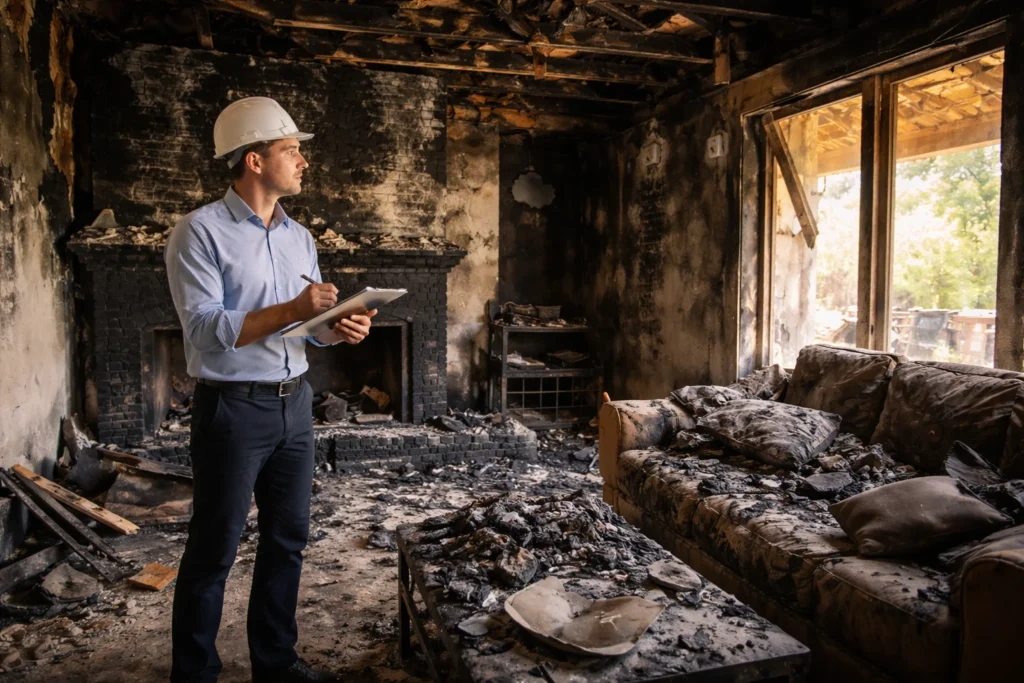
A fire can turn your life upside down in minutes. One moment everything is intact, the next you’re staring at damage, debris, and a long road ahead. And right in the middle of it all? The insurance claim process. This is where a fire insurance adjuster becomes critical.
Most homeowners assume their insurance company will simply calculate the damage and pay fairly. Sometimes that happens. Often, it doesn’t. Claims can be undervalued. Damage can be overlooked. Timelines can drag. And decisions made early can cost you thousands later. I’ve seen it happen. And I’ve also seen what changes when the right adjuster steps in. The difference isn’t small it’s significant. Let’s break it down.
What Is a Fire Insurance Adjuster?
A fire insurance adjuster is a professional who evaluates fire-related property damage and helps determine how much an insurance company should pay for a claim. But not all adjusters are the same. In fact, who they work for matters more than most people realize.
Types of Adjusters
- Insurance Company Adjuster (Staff Adjuster)
Works directly for your insurance company. Their job is to assess damage and settle claims but they represent the insurer. - Independent Adjuster
Contracted by insurance companies. Still represents the insurer, not you. - Public Adjuster (Fire Insurance Adjuster for Policyholders)
Works exclusively for you, the property owner. Their goal is to maximize your claim not minimize the payout.
That distinction is everything.
What Does a Fire Insurance Adjuster Do?
A good fire insurance adjuster doesn’t just “look at damage.” They build your case. Line by line. Detail by detail.
Core Responsibilities
- Damage Inspection
Assess visible and hidden damage from fire, smoke, soot, and water used to extinguish the fire. - Comprehensive Documentation
Inventory of damaged items, structural components, and secondary losses. - Policy Review
Understanding exactly what your insurance covers and what it doesn’t. - Cost Estimation
Accurate repair and replacement calculations based on current market rates. - Negotiation
Presenting and defending your claim to the insurance company.
Fire damage isn’t always obvious. Smoke can seep into walls. Heat can weaken structural integrity. Water can create mold risks. A skilled adjuster knows where to look and what to prove.
Fire Insurance Adjuster vs Insurance Company Adjuster
| Factor | Fire Insurance Adjuster (Public) | Insurance Company Adjuster |
| Who they work for | You (policyholder) | Insurance company |
| Goal | Maximize your payout | Control claim costs |
| Incentive | Higher settlement for you | Lower payout for insurer |
| Representation | Advocates for your claim | Protects insurer interests |
This isn’t about good vs bad. It’s about alignment.
Why Hiring a Fire Insurance Adjuster Matters
Handling a fire claim on your own sounds manageable until you’re in it. There’s paperwork. Estimates. Inspections. Phone calls. Deadlines. And all of it happens while you’re dealing with the emotional weight of the loss. A fire insurance adjuster changes that.
Key Benefits
- Higher claim settlements
- Less stress
- Faster resolution
- Stronger negotiation position
When Should You Call a Fire Insurance Adjuster?
Timing matters more than most people think.
Best Time to Call
- Immediately after the fire
- Before filing or finalizing your claim
- Before accepting any settlement
The Fire Insurance Claim Process Explained
- Emergency response
- File the claim
- Inspection
- Documentation
- Valuation
- Negotiation
- Settlement
A fire insurance adjuster ensures each step is handled correctly.
Common Challenges in Fire Insurance Claims
- Undervalued estimates
- Hidden damage ignored
- Policy confusion
- Delays
- Emotional pressure
Interestingly, navigating a fire claim can feel as complex as understanding a concept like epistemology because it requires knowing what counts as valid proof, what evidence matters, and how decisions are justified. That’s exactly why professional guidance matters.
How a Fire Insurance Adjuster Maximizes Your Settlement
- Detailed inventories
- Expert reports
- Policy interpretation
- Strong negotiation
- Claim reopening if needed
What to Look for in a Fire Insurance Adjuster
- Licensed
- Experienced with fire claims
- Local knowledge
- Clear communication
- Transparent fees
Costs and Fees
- Contingency-based
- Typically 5%–15%
- No upfront cost in most cases
Fire Damage Beyond Flames
- Smoke damage
- Water damage
- Structural issues
- Electrical damage
- Air contamination
Mistakes to Avoid
- Accepting the first offer
- Poor documentation
- Discarding evidence
- Misunderstanding policy
- Handling everything alone
Local Insight: McAllen Property Owners
A fire insurance adjuster with local expertise understands:
- Regional building costs
- Texas insurance practices
- Local claim trends
Final Thoughts
A fire changes everything. Fast. A fire insurance adjuster helps you regain control, protect your finances, and move forward with confidence. Because in the end, it’s not just about recovery it’s about getting what you’re truly owed.
FAQs
A fire insurance adjuster evaluates fire damage, documents losses, and helps determine how much compensation you should receive from your insurance claim.
Yes, especially for large or complex claims, because a fire insurance adjuster can help maximize your payout and handle negotiations with the insurer.
A public adjuster works for you, while an insurance adjuster represents the insurance company and protects its financial interests.
Most fire insurance adjusters work on a contingency fee, typically taking 5% to 15% of the final settlement.
You should contact a fire insurance adjuster as soon as possible after the fire, ideally before accepting any settlement offer.
In some cases, yes if damage was missed or underestimated, a fire insurance adjuster may help reopen and supplement the claim.
Claims can include structural damage, smoke and soot damage, water damage from firefighting efforts, and personal property losses.
No, a well-prepared claim handled by a fire insurance adjuster can actually speed up the process by reducing back-and-forth disputes.
Look for someone licensed, experienced with fire claims, transparent about fees, and knowledgeable about your local area.
Yes, but it can be challenging; without a fire insurance adjuster, you risk missing damages or accepting a lower settlement than you deserve.