
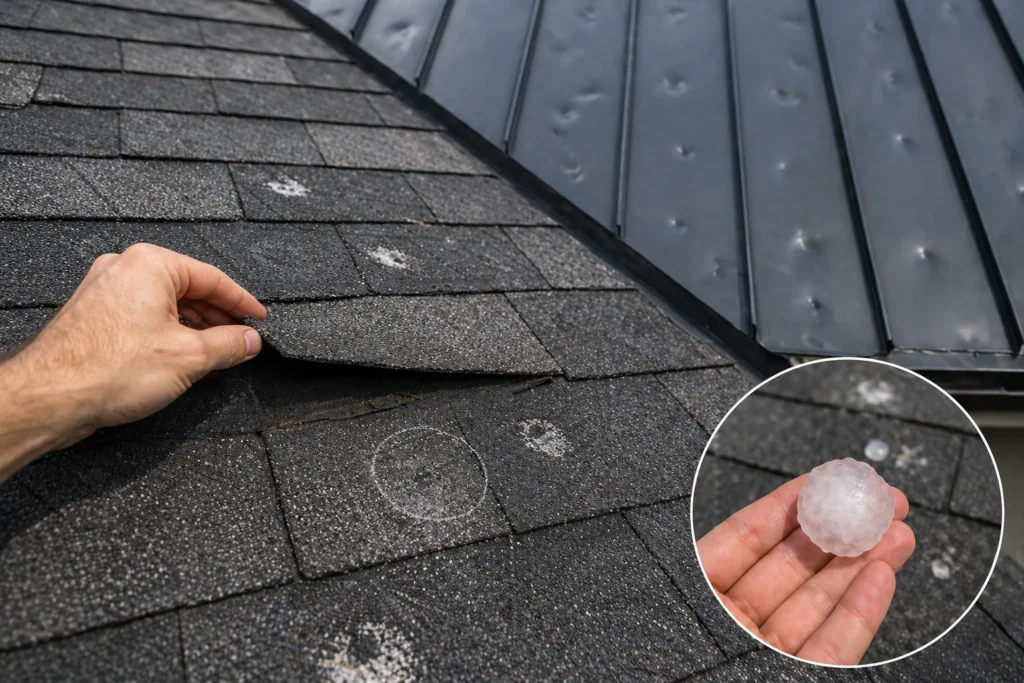
Hailstorms don’t just leave noise behind they leave damage. And if you’re planning to file a claim, how to document hail damage for an insurance claim becomes the single most important factor in how much you get paid. Not your policy. Not your deductible. Documentation. That’s the difference between a partial payout and a full recovery.
I’ve seen it play out both ways. Homeowners with solid, organized evidence walk away with full roof replacements. Others who “just took a few photos” end up underpaid or denied. The gap isn’t luck. It’s process. If you’re doing pre-hire research and want to understand this before calling a contractor or adjuster, this guide will give you a real advantage. We’re going step by step. Practical. Clear. No fluff. Just what works.
Why Proper Documentation Makes or Breaks Your Insurance Claim
Insurance companies don’t pay for what they suspect. They pay for what is clearly proven and well documented.
Your claim is essentially a structured argument backed by evidence. Every photo, note, and report either strengthens or weakens your position.
Here’s how documentation directly impacts your claim:
- Validation of cause – Proves damage came from a hailstorm, not aging or neglect
- Scope accuracy – Shows the full extent of damage across all roof slopes and components
- Cost justification – Supports higher repair or replacement estimates
- Negotiation leverage – Gives you evidence when pushing back on low offers
Without proper documentation, the insurance company defines the narrative. With strong documentation, you control it.
When to Start Documenting Hail Damage
Immediately. Not tomorrow. Not next week.
Time erodes evidence.
Wind can scatter debris. Rain can wash away impact marks. Sun exposure can reduce visible signs. And if another storm hits, your claim becomes harder to prove.
Start documenting as soon as it’s safe.
If you’re in a hail-prone region like McAllen, this becomes even more important. Multiple storms can overlap in the same season. Insurance carriers will question which storm caused the damage. Early documentation protects your timeline.
Quick action checklist after a storm:
- Walk the perimeter of your home
- Take initial ground-level photos
- Record the time and conditions
- Look for obvious signs like dented gutters or torn screens
Simple steps. Big impact.
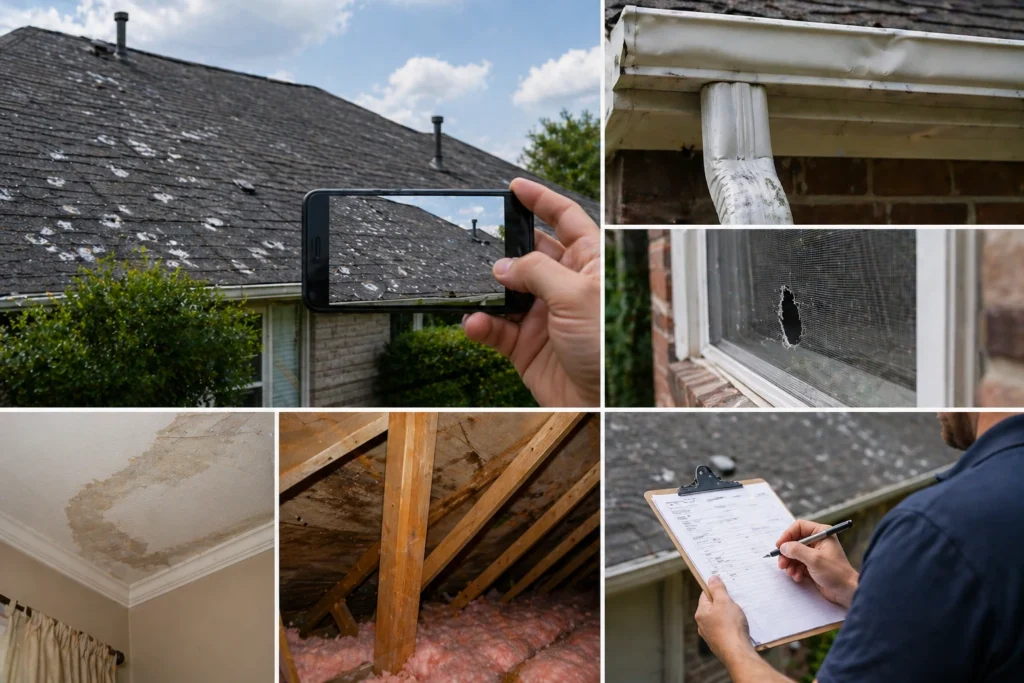
Step 1 – Capture Clear Photo Evidence of All Damage
Photos are the backbone of your claim.
But not just any photos. They need to be intentional.
Exterior Roof Documentation
Different roofing materials show hail damage differently. Understanding this helps you capture better evidence.
Asphalt Shingles
- Bruising (soft spots where granules are displaced)
- Granule loss exposing the mat
- Circular impact marks
Metal Roofing
- Visible dents across panels
- Scratches or coating damage
- Deformed seams
Tile Roofing
- Cracks and fractures
- Chips along edges
- Broken or displaced tiles
Take photos in layers:
- Wide shot of the entire roof section
- Mid-range shot showing clusters of damage
- Close-up of individual impact points
Repeat across all slopes.
Ground-Level & Property Damage
This is where strong claims separate from weak ones.
Focus on collateral damage:
- Gutters and downspouts (dents are key indicators)
- Window screens (holes or tears)
- Siding (impact marks)
- Outdoor furniture
- HVAC units (coil damage)
These elements often confirm hail size and intensity.
Photo Best Practices
| Best Practice | Why It Matters |
| Use timestamps | Proves timing of damage |
| Take multiple angles | Shows depth and severity |
| Keep lighting consistent | Improves clarity |
| Avoid zoom blur | Maintains detail integrity |
Good photos don’t just show damage. They tell a story.
Step 2 – Record Detailed Notes and Observations
Photos capture visuals. Notes provide context.
And context is what adjusters rely on.
Write down:
- Exact date and time of the storm
- Estimated hail size (compare to coins)
- Storm duration
- Wind direction (if noticeable)
- Specific areas affected
Example:
“April 3, 4:10 PM. Hail size between nickel and quarter. Heavy impact on west-facing slope. Gutters dented along entire edge.”
Short. Clear. Effective.
These notes strengthen your claim and make your documentation more credible.
Step 3 – Document Interior Damage

Exterior damage gets attention. Interior damage gets results.
This is where claims move from “cosmetic” to “functional.”
What to Look For
- Water stains on ceilings
- Discoloration on walls
- Bubbling paint
- Damp insulation in attic
- Musty odors
Even small signs matter.
Why Interior Damage Is Critical
Insurance companies often argue that roof damage is cosmetic. But when water enters your home, the situation changes.
Interior damage:
- Proves the roof system has been compromised
- Justifies full replacement instead of patchwork repairs
- Increases claim value significantly
This is a key part of mastering how to document hail damage for an insurance claim connecting outside impact with inside consequences.
Step 4 – Preserve Physical Evidence (If Safe)
You don’t always get this opportunity. But when you do, take it.
Examples:
- Collect hailstones and photograph them next to a ruler
- Save broken shingles or tiles
- Document debris patterns around your property
Physical evidence adds another layer of credibility.
Step 5 – Gather Supporting Documentation
Strong claims go beyond photos and notes.
You need supporting evidence.
What to Include
- Roof age and maintenance records
- Previous repair invoices
- Contractor inspection reports
- Weather data confirming hail activity
- Insurance policy documents
For weather verification, official data is often referenced. Here’s a complex atmospheric concept tied to storm pressure dynamics Baroclinity.
You don’t need to fully understand it. But it reinforces how storm systems develop and intensify.
Step 6 – Get a Professional Roof Inspection
This step changes everything.
Professionals see what homeowners miss.
They identify:
- Hidden structural damage
- Subsurface bruising
- Code-required upgrades
- Full replacement needs
In areas like McAllen, where storms can vary in intensity, professional inspections often uncover damage that isn’t visible from the ground.
If you’re researching a Roof Hail Damage Insurance Claim McAllen, this step often determines whether your claim is underpaid or fully approved.
Step 7 – Organize Your Claim File Like a Pro
Disorganized documentation weakens even strong evidence.
Organization builds credibility.
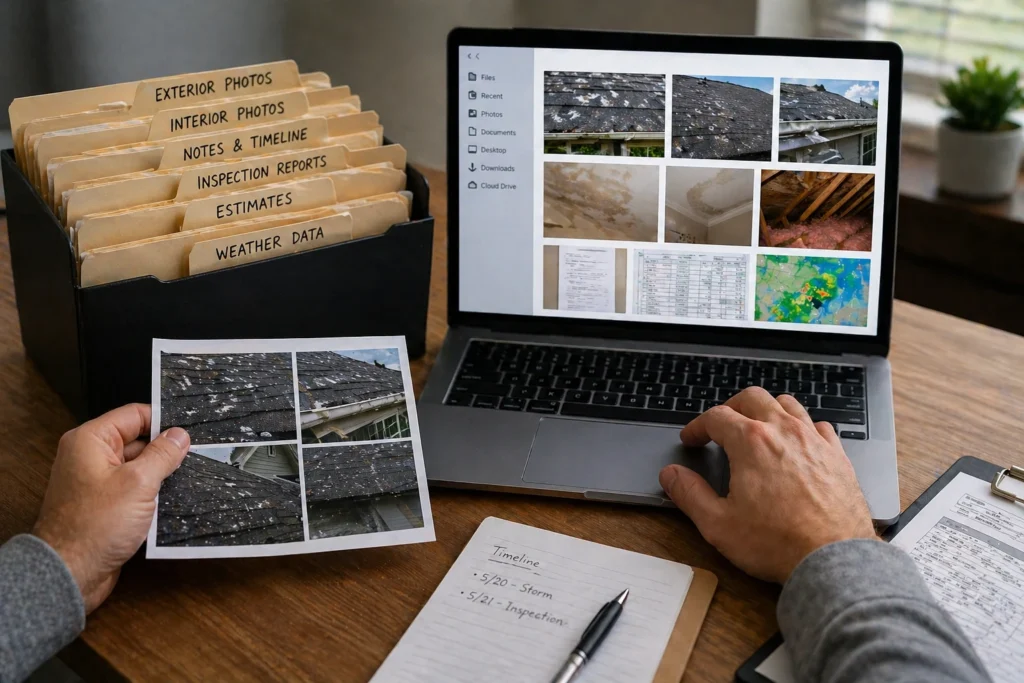
Structure Your File
Create folders:
- Exterior photos
- Interior photos
- Notes and timeline
- Inspection reports
- Estimates
- Weather data
Go Digital
Use cloud storage:
- Google Drive
- Dropbox
- iCloud
Label files clearly:
- “FrontSlope_CloseUp_Impact1.jpg”
- “Ceiling_Leak_LivingRoom.jpg”
Clear naming makes review easier for adjusters and faster decisions for your claim.
Common Mistakes When Documenting Hail Damage
Mistakes happen. But avoid these:
- Taking only a few photos
- Ignoring collateral damage
- Missing interior signs
- Waiting too long
- Relying solely on insurance inspections
Each mistake reduces your leverage.
What Insurance Companies Look for in Your Documentation
Adjusters are trained to evaluate consistency.
They ask:
- Does the damage match the storm date?
- Are all areas documented?
- Is the damage functional or cosmetic?
- Is there supporting evidence?
Strong documentation answers these questions before they’re even asked.
How Documentation Impacts Claim Value and Supplements
Here’s where things get real.
Strong documentation leads to:
- Higher initial payouts
- Faster approvals
- Fewer disputes
Weak documentation leads to supplements.
That’s why many claims involve
Hail Damage Claim Supplements: What Carriers Miss in Their Scope.
Supplements can recover money. But they take time.
Better documentation upfront reduces the need for them.
Advanced Strategy: Xactimate Line Items That Increase Claim Value
This is where professional-level documentation creates serious leverage.
Insurance estimates are often written using Xactimate. If certain line items are missing, your claim gets underpaid.
Commonly Missed Line Items
| Category | Line Item | Impact |
| Roofing | Tear-off & disposal | High |
| Roofing | Steep roof charges | Medium |
| Waterproofing | Ice & water shield | High |
| Ventilation | Ridge vents | Medium |
| Flashing | Step & counter flashing | High |
If these aren’t documented, they’re often not paid.
This is why detailed documentation and sometimes professional involvement matters so much.
Real-World Example: Weak vs Strong Documentation
Weak Documentation
- Minimal photos
- No structured notes
- No inspection
Outcome:
Claim approved… but underpaid. Repairs don’t fully cover damage.
Strong Documentation
- Full photo set
- Detailed notes
- Professional inspection
- Organized file
Outcome:
Full roof replacement approved. All damage accounted for.
Same storm. Different approach. Different result.
When to Bring in a Public Adjuster
Sometimes, even strong documentation isn’t enough.
That’s when professional representation matters.
Consider help if:
- Your claim is denied
- Your payout is too low
- The process becomes complex
This ties into:
- What to Do If Your Hail Claim Was Denied in Texas
- Public Adjuster vs. Insurance Adjuster for Hail Claims in Texas
In competitive claim environments like McAllen, having someone advocate for your claim can significantly change the outcome.
Final Checklist: How to Document Hail Damage for an Insurance Claim

- Take clear, detailed photos
- Document all affected areas
- Record storm details
- Capture interior damage
- Gather supporting documents
- Get a professional inspection
- Organize everything
Conclusion
Insurance claims aren’t about what happened. They’re about what you can prove happened. That’s why how to document hail damage for an insurance claim matters so much. It’s the foundation. The leverage. The difference-maker. Take control early. Document thoroughly. Stay organized. Because when it’s done right you don’t just file a claim.
FAQs
As soon as it’s safe delays can weaken your claim and make damage harder to prove.
Clear, well-lit photos of roof damage, gutters, siding, and interior leaks are essential.
No start with ground-level photos and use a professional for safe roof inspections.
Yes, but a professional inspection often uncovers hidden damage and strengthens your claim.
Water stains, ceiling discoloration, damp insulation, and any signs of leaks.
Take as many as needed to fully show all affected areas from multiple angles.
You can still file a claim, but proving the storm caused the damage may be harder.
Yes detailed documentation often leads to higher and more accurate settlements.
Inspection reports, repair records, weather data, and your insurance policy details.
If your claim is denied, delayed, or underpaid, professional help can improve outcomes.