
Hail doesn’t knock politely. It hits fast, hard, and uneven. And when it does, your roof absorbs the impact whether you see it or not. That’s exactly why a roof hail damage insurance claim McAllen homeowners file needs to be handled with precision from day one. Most claims fail quietly not because damage isn’t there, but because it isn’t properly identified, documented, or presented.
I’ve seen it too many times. Homeowners assume everything looks fine from the ground. Weeks later, leaks appear. Months later, insurers argue the damage wasn’t storm-related. That’s how value disappears. If you want a strong outcome, you need a strategy. Not guesswork. Not assumptions. A clear process. This guide is built to be that process the most complete resource you can follow from first impact to final settlement.
Understanding How Hail Impacts Different Roof Types
Hail damage isn’t uniform. Different materials absorb and show impact in different ways. If you don’t know what to look for, you’ll miss critical damage that belongs in your hail damage on roof insurance claim.
Asphalt Shingle Roofs (Most Common, Most Misdiagnosed)
Asphalt shingles take the majority of hail hits and the majority of claim disputes.
What real damage looks like:
- Granule loss exposing the asphalt mat
- Soft bruising beneath the surface
- Random, circular impact marks
- Shiny or dark spots where granules are gone
Granules aren’t decorative. They protect the shingle from UV breakdown. Once removed, deterioration accelerates quickly. Insurers often argue “wear and tear,” but true hail damage appears in scattered, inconsistent patterns not uniform aging.
Pro tip: Run your hand across suspect areas. If it feels soft or spongy, that’s bruising. That’s impact. That belongs in your hail roof damage insurance claim.
Metal Roofs (Strong but Often Undervalued)
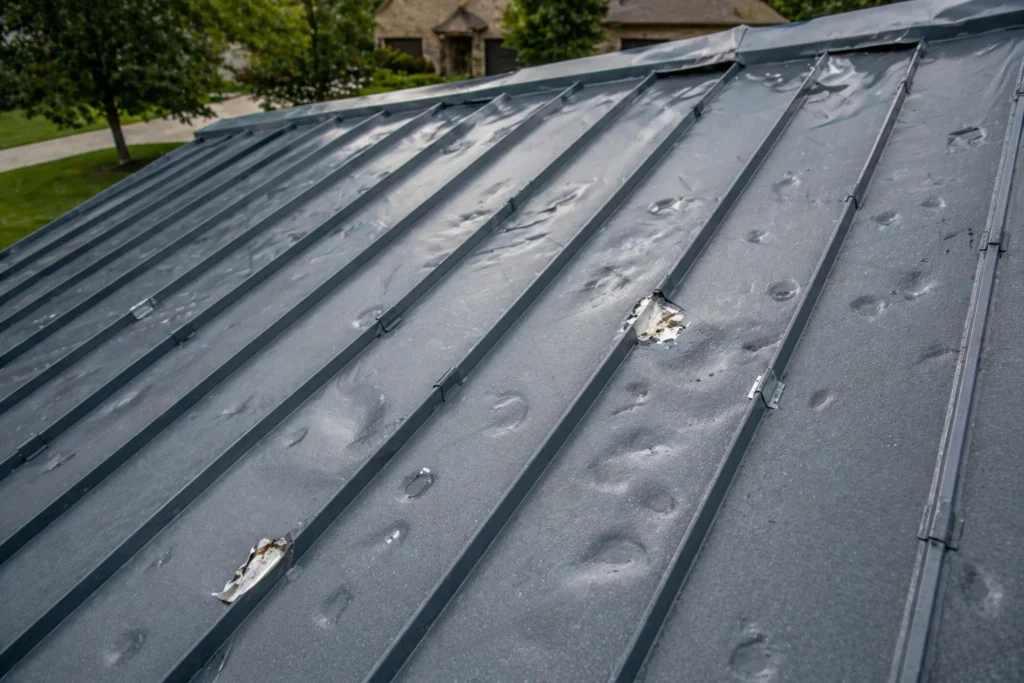
Metal roofs resist penetration, but they still suffer impact damage.
Key signs:
- Dents across panels
- Coating damage exposing metal
- Seam distortion
Insurance companies often call this cosmetic. That’s where you push back. Cosmetic damage still affects resale value and long-term performance. And that matters.
Tile Roofs (Durable but Fragile Under Impact)
Tile roofs handle small impacts well but larger hailstones cause immediate failure.
Look for:
- Cracked or shattered tiles
- Slipped or displaced sections
- Underlayment exposure
One cracked tile doesn’t stay isolated. Water gets in. Damage spreads. Matching tiles later can be difficult, increasing repair complexity and cost.
Flat Roofs (Hidden Damage, Bigger Consequences)
Flat roofs rarely show obvious signs from a distance.
Typical issues:
- Membrane punctures
- Blistering
- Drainage disruption
Damage here often shows up later. That’s why early inspection is critical for any roof hail damage insurance claim McAllen.
Immediate Steps After a Hailstorm
The clock starts immediately after the storm. What you do next shapes your entire claim.
Your First 24–72 Hours Plan
Step 1: Safety First
Stay off the roof. Wet surfaces and hidden structural damage increase risk.
Step 2: Ground-Level Assessment
Walk your property. Look for:
- Dented gutters
- Damaged siding
- Broken outdoor fixtures
If these are hit, your roof is likely impacted too.
Step 3: Document Immediately
Take photos before conditions change. Capture everything.
Step 4: Prevent Further Damage
Use tarps or temporary fixes if needed. Keep receipts.
Step 5: Call for a Professional Inspection
Don’t rely on assumptions. Get expert verification.
Early action strengthens your hail damage on roof insurance claim and prevents disputes later.
How to Document Hail Damage for an Insurance Claim

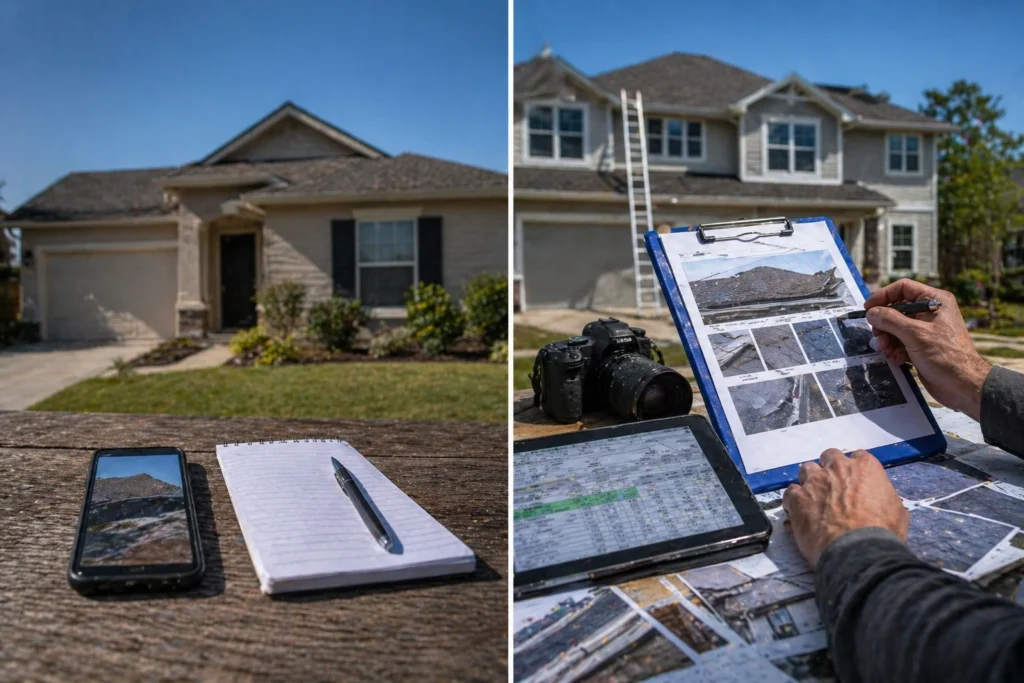
This is where claims are won. When homeowners ask about How to Document Hail Damage for an Insurance Claim, the answer always comes down to consistency, clarity, and completeness. Every photo, every note, every timestamp contributes to the strength of your case.
What to Capture
- Full roof overviews
- Close-up impact marks
- Damaged components (vents, flashing, gutters)
- Interior water damage
- Ground-level evidence
Advanced Documentation Tips
- Use consistent lighting
- Photograph from multiple angles
- Include scale references (coin or ruler)
- Record a full walkthrough video
- Store files securely
Documentation Breakdown
| Evidence Type | Why It Matters |
| Roof photos | Shows direct damage |
| Interior leaks | Proves severity |
| Weather reports | Confirms event |
| Inspection report | Adds credibility |
Think of your claim like layered evidence each piece supporting the next, similar to a complex geological system like a metamorphic rock, where pressure reveals hidden structural changes beneath the surface.
Filing Your Roof Hail Damage Insurance Claim McAllen the Right Way
Filing is simple. Filing correctly is where most claims fail.
Start With Your Policy
Understand:
- Deductibles
- Coverage limits
- Replacement cost vs actual cash value
Submit a Complete Claim
Include:
- Exact date of loss
- Detailed damage description
- Supporting documentation
Avoid These Mistakes
- Waiting too long
- Being vague
- Missing documentation
- Accepting initial inspections without review
A strong roof hail damage insurance claim McAllen starts with clarity and precision.
What Insurance Companies Commonly Miss
This is where claim value disappears.
Frequently Missed Items
- Underlayment damage
- Flashing replacements
- Ridge cap shingles
- Vent components
- Code upgrades
- Interior damage
Each missed item reduces your payout. Collectively, they can cost thousands.
The Supplement Process: Recovering What Was Missed
This is where strong claims gain power.
Many professionals refer to this stage as Hail Damage Claim Supplements: What Carriers Miss in Their Scope, because it focuses on identifying and correcting gaps left in the original estimate.
What Is a Supplement?
An additional claim request for missed or newly discovered damage.
When to Use It
- Initial estimate is incomplete
- Hidden damage appears
- Pricing is inaccurate
How to Build a Strong Supplement
- Detailed line-item estimates
- Local pricing data
- Photo evidence
- Code references
Common Supplement Additions
| Category | Item | Impact |
| Roofing | Tear-off | High |
| Waterproofing | Ice barrier | High |
| Ventilation | Ridge vent | Medium |
Supplements are where real value is recovered.
Inspection Walkthrough: What a Proper Roof Check Looks Like
Want control over your claim? Understand inspections.
Exterior Checklist
- Shingle bruising and granule loss
- Flashing and vent damage
- Metal dents
- Gutter impact marks
Interior Checklist
- Ceiling stains
- Attic moisture
- Insulation damage
Ground Indicators
- Granules in gutters
- Dented outdoor items
- Broken landscaping
A detailed inspection strengthens your hail roof damage insurance claim significantly.
Step-by-Step Claim Timeline (From Storm to Settlement)
Understanding the timeline helps you stay ahead.
Day 1–3: Damage Occurs
- Document immediately
- Prevent further damage
Day 3–7: Inspection Phase
- Schedule professional inspection
- Gather documentation
Week 1–2: File Claim
- Submit claim with evidence
- Prepare for adjuster visit
Week 2–4: Adjuster Inspection
- Be present if possible
- Ensure all damage is noted
Week 3–6: Initial Estimate
- Review carefully
- Identify missing items
Week 4–8: Supplement Phase
- Submit additional requests
- Negotiate
Final Step: Settlement
- Approve scope
- Begin repairs
This structured approach keeps your roof hail damage insurance claim McAllen on track.
Why a Public Adjuster Changes the Outcome
Handling a claim alone sounds simple until you’re in it. The discussion often comes down to Public Adjuster vs. Insurance Adjuster for Hail Claims in McAllen, and the difference is more than just roles it’s about who is advocating for your financial outcome.
Public Adjuster vs Insurance Adjuster
| Type | Works For | Goal |
| Insurance Adjuster | Insurance company | Limit payout |
| Public Adjuster | You | Maximize claim |
What a Public Adjuster Does
- Conducts detailed inspections
- Identifies missed damage
- Prepares accurate estimates
- Negotiates with insurers
Why It Matters
Representation changes leverage. Leverage changes results.
What Happens If Your Claim Gets Denied
Denials happen more often than most homeowners expect. Understanding What to Do If Your Hail Claim Was Denied in McAllen can turn a setback into a second opportunity.
Recovery Steps
- Review the denial letter carefully
- Identify the reason
- Gather stronger evidence
- Request reinspection
- File an appeal
Persistence often leads to better outcomes.
Common Mistakes That Reduce Claim Value
Avoid these:
- Waiting too long
- Accepting first offers
- Poor documentation
- Hiring inexperienced contractors
- Misunderstanding policy coverage
Each mistake weakens your claim.
Advanced Strategies to Maximize Your Claim
1. Use Local Pricing
Accurate costs matter.
2. Identify Hidden Damage
Look beyond the surface.
3. Get Multiple Inspections
More perspectives = stronger claim.
4. Use Expert Reports
Adds weight and credibility.
5. Control Timing
Don’t rush negotiations.
Real-World Scenario: Weak Claim vs Strong Claim
Weak Claim
- Minimal documentation
- No professional inspection
- Accepts first offer
Result: Underpaid claim.
Strong Claim
- Detailed documentation
- Professional inspection
- Supplement process used
Result: Full payout.
Final Checklist: Protecting Your Roof and Your Claim
- Inspect safely
- Document thoroughly
- File promptly
- Review estimates
- Submit supplements
- Escalate if needed
- Consider expert help
Conclusion: Protect Your Roof and Your Financial Outcome
A roof hail damage insurance claim McAllen homeowners file isn’t just paperwork. It’s strategy. It’s leverage. It’s the difference between partial repairs and full recovery. Move too fast, and you miss details. Move too slow, and you lose leverage.
The right approach is controlled. Complete. Strategic. Your roof protects your home. Your claim should protect your investment. Handle it right and it will.
FAQs
Look for granule loss, dents, cracks, or soft spots on shingles, along with damage to gutters and vents.
Most policies allow up to one year, but filing as soon as possible strengthens your claim.
Coverage depends on your policy, including deductibles and whether it’s replacement cost or actual cash value.
Yes, and insurers often argue this, which is why proper documentation is critical.
Document the damage, prevent further issues, and schedule a professional inspection quickly.
It’s highly recommended because experts can identify damage you might miss.
It’s a request for additional funds when damage was missed or underestimated in the initial claim.
Common reasons include lack of evidence, delayed filing, or insurers classifying damage as wear and tear.
Not always initial offers often miss key items and may undervalue your claim.
They handle inspections, documentation, and negotiations to help maximize your payout.